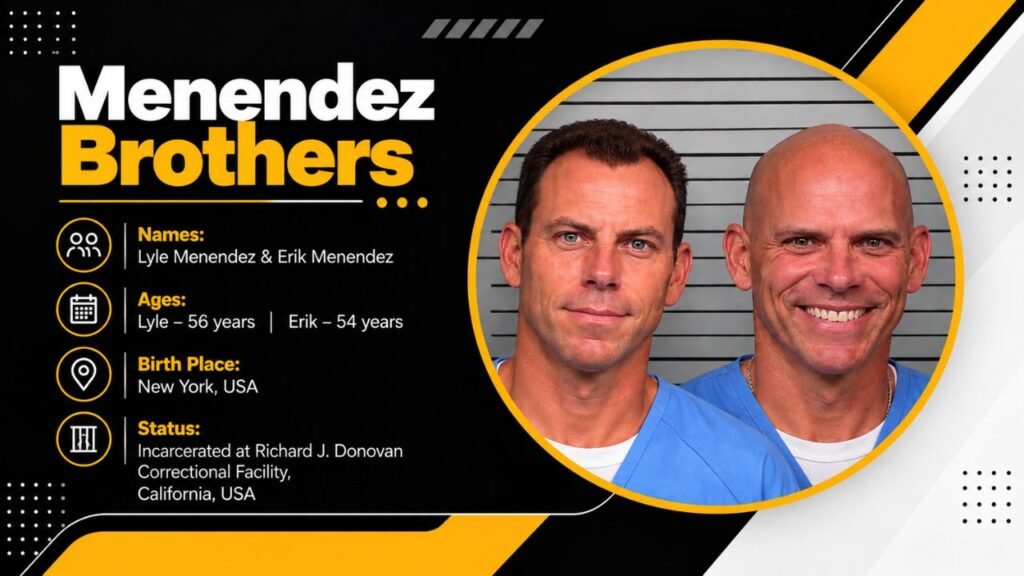
It’s been over thirty years, and people still can’t stop talking about the Menendez brothers. Every time there’s a new development – a court date, a documentary, a viral TikTok breaking down the trial footage – the case somehow finds its way back to the top of everyone’s feed. That’s exactly what’s happening again right now. So let’s actually dig into it: who Lyle and Erik Menendez are, what happened back in 1989, how their case has changed so much in just the last couple of years, and where things stand heading into 2027.
Quick Facts Table
| Detail | Information |
| Names | Lyle Menendez, Erik Menendez |
| Date of crime | August 20, 1989 |
| Location | Beverly Hills, California |
| Victims | Jose Menendez (father), Kitty Menendez (mother) |
| Ages at time of crime | Lyle: 21, Erik: 18 |
| First trial | 1993–94, ended in hung juries |
| Second trial verdict | 1996, guilty on all counts |
| Original sentence | Life without parole |
| 2025 resentencing | 50 years to life, parole eligible |
| Current facility | Richard J. Donovan Correctional Facility |
| Next parole hearing | Tentatively March 2027 |
Who Are the Menendez Brothers
Lyle and Erik Menendez grew up in Beverly Hills, in a house most people would kill for (no pun intended). Lyle, born in 1968, was the older one. Erik came along two years later, in 1970. Their dad, Jose Menendez, was a Cuban-born entertainment executive who’d clawed his way to serious wealth and power. Their mom, Kitty, had been a teacher and, before that, a beauty pageant contestant.
On paper, it looked like the perfect American success story. Money, prestige, a mansion, private schools. Lyle went off to Princeton (though he got suspended there for cheating), and Erik was busy chasing a career as a junior tennis player. From the outside, this was a family that had made it.
A quick snapshot before things fell apart:
- Lyle Menendez – the older brother, Princeton-bound before his suspension
- Erik Menendez – the younger brother, aspiring competitive tennis player
- Jose Menendez – father, a powerful and demanding entertainment executive
- Kitty Menendez – mother, former teacher, former pageant contestant
The Night Everything Changed
On the night of August 20, 1989, someone shot Jose and Kitty Menendez to death in the family room of their home, while they sat watching TV. Whoever did it wasn’t holding back – both parents were hit multiple times at close range with shotguns that, as it later turned out, the brothers had bought just days before.
Lyle and Erik told police a simple story: they’d gone out to a movie, come home, and found their parents dead. Then came the 911 call – Lyle, sounding frantic, screaming that someone had killed his parents. That call has been replayed more times than almost any other piece of audio in American crime history.
For a while, nobody suspected the sons at all. Detectives were looking at Jose’s business dealings, wondering if this was some kind of contract hit tied to the entertainment world. But then Lyle and Erik started spending money. A lot of money. Cars, restaurants, a Buffalo wings franchise idea, first-class trips – all within weeks of burying their parents. That’s when eyebrows really started going up.
How Investigators Cracked The Menendez Brothers Case
Here’s the part that actually broke the case wide open: Erik had been seeing a therapist, Dr. Jerome Oziel, and during one of their sessions, he essentially admitted to the murders. Oziel, apparently worried about what he now knew, recorded those sessions. Later, his mistress went to the police about the tapes’ existence. Once law enforcement got their hands on that recording, everything changed. In 1990, both brothers were arrested and charged with first-degree murder.
Trial One: A Jury That Couldn’t Agree
The first trial kicked off in 1993, and it used an unusual setup – two separate juries, one for each brother, sitting in the same courtroom at the same time, hearing slightly different sets of evidence depending on which brother it applied to.
The defense strategy, led by Leslie Abramson on Erik’s side, was built around one central claim: years of abuse. Sexual, physical, emotional – all allegedly inflicted by their father, with their mother aware and, according to the defense, complicit. The brothers said they genuinely believed their parents were going to kill them to keep the abuse quiet, and that they’d acted purely out of fear.
Prosecutors weren’t buying it. Their version was much simpler – greed. Two spoiled kids who wanted their inheritance and weren’t willing to wait for it.
Court TV aired the whole thing, and the country was glued to it. In January 1994, both juries deadlocked. Mistrial. A lot of people took that as a sign the abuse defense had at least gotten through to some jurors, even if it didn’t get anyone acquitted outright.
Trial Two: This Time, a Verdict
By 1995, the brothers were back in court, but the playing field had shifted. One jury this time, not two. The judge significantly limited how much abuse testimony could come in. And cameras? Banned. No more Court TV drama beaming into living rooms across the country.
Without the same level of sympathetic media coverage, and with a lot less room to argue the abuse narrative, the trial played out very differently. In March 1996, the jury found both brothers guilty of first-degree murder and conspiracy. That July, they were sentenced to life without the possibility of parole – a sentence that, at the time, seemed permanent. No appeals process was going to undo that. Or so everyone thought.
Menendez Brothers Case Timeline at a Glance
| Year | Event |
| 1989 | Parents murdered in Beverly Hills |
| 1990 | Brothers arrested and charged |
| 1993–94 | First trial ends in hung juries |
| 1996 | Second trial: guilty verdict, life without parole |
| 2024 | Netflix’s Monsters released, renewed public interest |
| May 2025 | Resentenced to 50 years to life, parole eligible |
| Aug 2025 | First parole hearings for both brothers denied |
| Sep 2025 | Habeas petition for new trial rejected |
| Sep 2026 | Early parole hearing approved for March 2027 |
What Life Behind Bars Actually Looked Like
For most of the next three decades, the Menendez brothers just… existed in the system. Out of the spotlight, mostly. They were kept apart for years – different prisons entirely – which the family has always said was one of the hardest parts of the whole ordeal. Eventually they were reunited at the same facility, something relatives describe as an emotional turning point regardless of how the parole situation plays out.
Both brothers say they’ve used the time to grow. Education programs, counseling groups, mentoring other incarcerated people – that’s the version of the story their supporters like to tell, and honestly, prison records back up at least some of it.
Menendez Brothers Netflix Happened
Here’s the thing about true crime cases – they can sit dormant for years and then suddenly explode back into relevance overnight. That’s basically what happened in September 2024, when Netflix dropped Monsters: The Lyle and Erik Menendez Story, season two of Ryan Murphy and Ian Brennan’s anthology series (the one that started with the Dahmer show). Within the first couple of weeks, it had racked up tens of millions of views. Social media couldn’t stop talking about it.
The Cast Everyone’s Talking About
| Character | Actor |
| Erik Menendez | Cooper Koch |
| Lyle Menendez | Nicholas Alexander Chavez |
| Jose Menendez | Javier Bardem |
| Kitty Menendez | Chloë Sevigny |
| Dominick Dunne | Nathan Lane |
| Leslie Abramson | Ari Graynor |
The show told the story Rashomon-style – meaning you get several conflicting versions of events depending on whose perspective you’re following, and it’s up to you to decide who to believe. It picked up multiple Golden Globe nominations, and it split viewers pretty evenly: some thought it was a genuinely empathetic, nuanced retelling; others accused it of leaning into shock value.
And it wasn’t just a one-and-done thing for the cast, either. Both Cooper Koch and Nicholas Alexander Chavez have said publicly that they’ve stayed emotionally invested in the real case. Koch reportedly showed up in person to one of the resentencing hearings and even met Erik’s wife, Tammi, and other family members there.
Why the DA Pushed for Resentencing
In October 2024 – right in the middle of all that Netflix buzz – LA County DA George Gascón announced his office would push for resentencing. His reasoning came down to new evidence that had surfaced, including:
- A letter Erik wrote to a cousin eight months before the murders, describing the alleged abuse in detail
- A declaration from a former member of the boy band Menudo, alleging Jose Menendez had assaulted him too
- A broader shift in how society talks about abuse now compared to the 1990s, especially when it comes to male survivors
None of this evidence guaranteed anything. But combined, it was enough to reopen a door that had been sealed shut for nearly thirty years.
Meet Menendez Brothers Lawyer: Mark Geragos
If you’ve followed any of the recent coverage, you’ve probably seen the name Mark Geragos attached to almost every headline. He’s a well-known LA defense attorney, and he’s the one who’s been steering the resentencing and habeas corpus efforts. After the resentencing was granted in May 2025, he called it a huge win. Then, a few months later, after parole got denied in August 2025, his tone flipped completely – he came out swinging, calling the hearing process rigged and saying the outcome felt decided before anyone even walked into the room.
Worth noting: Geragos is different from Leslie Abramson, the attorney who ran Erik’s defense back in the original trials. Abramson’s work in the ’90s basically laid the foundation for the entire abuse-based defense that’s still central to the case today.
The 2025 Resentencing (and the Denial That Followed)
May 2025 brought the biggest legal shift in decades – a judge cut the sentences down to 50 years to life, which under California’s youth offender parole rules (crimes committed before age 26) made both brothers eligible for parole.
That eligibility got tested fast. Both brothers had parole hearings that August, and both got denied. The board pointed to a few specific things:
- Fights and physical altercations earlier in their sentences
- Contraband cellphones found more recently
Tammi, Erik’s wife, went on social media and basically said the whole thing felt like a setup. A habeas petition asking for a full new trial was filed too – that got rejected in September 2025.
Where Menendez Brothers Now
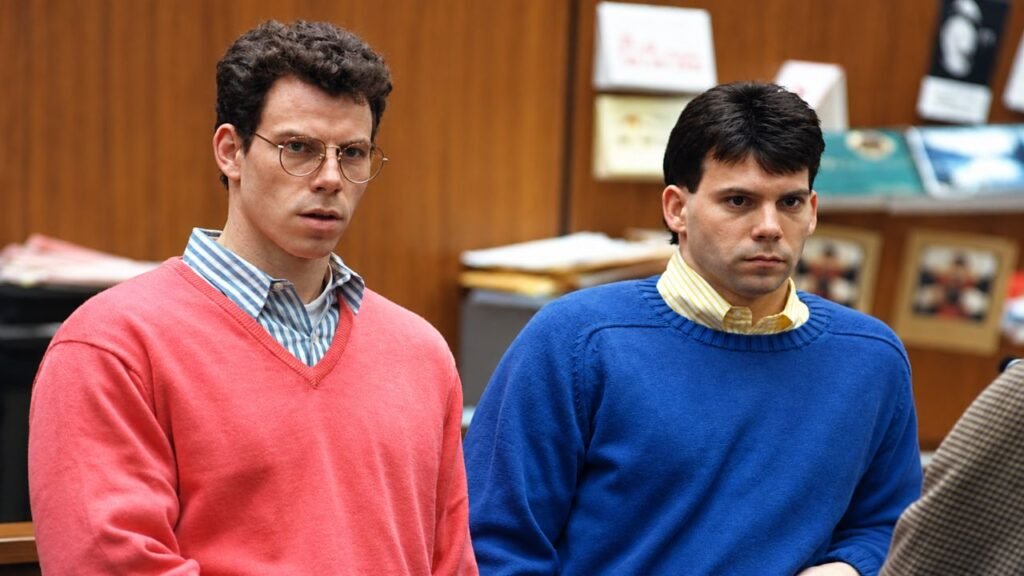
Right now, both brothers are at Richard J. Donovan Correctional Facility, not far from San Diego. And the newest piece of the puzzle: in September 2026, officials approved an early parole suitability hearing, tentatively set for March 2027. That’s roughly a year sooner than the 2028 date everyone was originally expecting. Nothing’s locked in yet – these dates shift around – but it’s still a meaningful move forward.
Menendez Brothers Wives Nobody Expected
| Brother | Wife | Married |
| Erik Menendez | Tammi Menendez (formerly Saccoman) | 1999, Folsom State Prison |
| Lyle Menendez | Anna Eriksson (1st wife) | July 2, 1996 |
| Lyle Menendez | Rebecca Sneed (2nd wife) | 2003, Mule Creek State Prison |
Tammi’s story is honestly one of the stranger parts of this whole saga. She started writing to Erik back in 1993, while she was still married to someone else, after watching his trial on TV. They wrote letters for years before ever meeting face to face. They finally married in 1999, and she’s remained one of his loudest public defenders ever since.
Lyle’s first marriage, to Anna Eriksson, happened on the exact same day he was sentenced in 1996 – talk about a strange coincidence of timing. That marriage eventually ended, and he later married Rebecca Sneed in 2003. She started out writing him letters as a journalist covering the case and ended up becoming his wife – and, later, an attorney herself.
Wait, Were Menendez Brothers Adopted?
No – and this comes up constantly. Lyle and Erik were the biological sons of Jose and Kitty Menendez. Not adopted. It’s just one of those persistent myths that spreads whenever a new wave of people discovers the case for the first time.
About the House
The murders happened inside the family’s Beverly Hills mansion. That house has changed hands several times since 1989, and the people living there now have absolutely nothing to do with the case. We’re intentionally not sharing the exact address here – the current residents didn’t sign up to have true crime tourists showing up outside their front door.
Family Members Who Never Stopped Fighting
If there’s one reason this case never really faded away, it’s the family. Cousins, aunts – several relatives have spent decades publicly advocating for Lyle and Erik, insisting the abuse was real and that the brothers deserved a second look. Some of them appeared in the Netflix documentary, sharing memories from inside the household long before the murders happened. Several also showed up in person at the 2025 resentencing hearing.
Their pressure wasn’t just emotional support from the sidelines – it genuinely shaped media coverage over the years, especially during the long stretches when nothing else was happening legally. When Gascón’s office recommended resentencing, family members were quick to say it was years of persistence finally paying off, combined with the wave of attention Netflix brought.
How Coverage Has Changed Since the ’90s
Back in the ’90s, Court TV made the trial into daily must-watch television, and Dominick Dunne’s columns in Vanity Fair basically shaped how the whole country saw the brothers – often pretty unflatteringly, painting them as entitled kids who killed for cash.
Now? It’s a totally different media landscape. Streaming, TikTok, true crime podcasts, Reddit threads dissecting every hearing in real time. And the tone has shifted too – a lot of younger viewers discovering this case for the first time through Netflix seem noticeably more sympathetic to the abuse claims than 1990s audiences ever were. Some of that’s just cultural change – we talk about trauma and abuse survivors, especially male survivors, very differently than we did thirty years ago.
Netflix didn’t stop at the drama, either – they followed it up with a documentary featuring real interviews and archival footage, giving people a way to compare the dramatized version against the actual case. Together, those two releases functioned almost like a crash course for anyone who’d only vaguely heard the name “Menendez” before 2024.
What the Parole Process Actually Looks Like
A lot of people assume resentencing basically equals freedom. It doesn’t. Legal experts have been pretty clear that resentencing just opens the door to eligibility – it says nothing about the actual outcome of any specific hearing. Parole boards look at things like:
- Whether the person shows real insight into what they did, not just remorse
- Disciplinary history behind bars
- Participation in rehab and education programs
- Psychological risk assessments
- How likely they are, in the board’s judgment, to reoffend
That’s part of why the August 2025 denial, even coming right after the big resentencing win, didn’t shock legal analysts nearly as much as it shocked the family. First-time parole hearings get denied all the time, even for people with genuinely strong rehabilitation stories.
What Could Happen at the March 2027 Hearing
Now that there’s an actual date on the calendar, everyone’s speculating about what it’ll take for the brothers to succeed this time. Based on what the board cited in 2025, a few things will probably matter most:
- Clean disciplinary record – no more cellphone incidents, no altercations
- Genuine insight – showing they truly understand the impact of what they did
- Continued rehabilitation work – programs, education, mentoring
- Risk assessments – psychological evaluations weighing future danger
- Family and victim-related statements – even complicated given the victims were their own parents
Geragos and the family say they plan to bring updated evidence of personal growth to this next hearing. Whether an earlier date means the board is genuinely leaning more favorably, or it’s just an administrative scheduling shuffle with zero bearing on the outcome, honestly nobody knows yet. And the family, having been burned once already in August 2025, has been noticeably cautious about getting anyone’s hopes up too high this time.
Trial One vs. Trial Two, Side by Side
| Factor | First Trial (1993–94) | Second Trial (1995–96) |
| Juries | Separate jury for each brother | Single jury for both |
| Cameras in court | Allowed (Court TV) | Banned |
| Abuse testimony | Extensively presented | Heavily restricted |
| Outcome | Hung juries, mistrial | Guilty on all counts |
| Sentence | N/A | Life without parole |
This comparison kind of explains the whole debate people still have about the case. A lot of observers think the tighter rules and reduced media coverage in the second trial made it much harder for jurors to fully weigh the abuse narrative the way the first jury had.
Read More Blogs: mackenzie shirilla | duane keefe d davis | Kewon White | Kouri Richins
Frequently Asked Questions
Yes, both remain incarcerated after their August 2025 parole denial.
An early parole hearing was approved in September 2026, tentatively scheduled for March 2027.
No – they’re the biological sons of Jose and Kitty Menendez.
Mark Geragos.
Erik is married to Tammi Menendez; Lyle is married to Rebecca Sneed, after previously being married to Anna Eriksson.
Monsters: The Lyle and Erik Menendez Story, released in 2024.
Cooper Koch plays Erik, Nicholas Alexander Chavez plays Lyle.
Cooper Koch plays Erik, Nicholas Alexander Chavez plays Lyle.
Lyle was 21, Erik was 18.
Maybe. The March 2027 hearing is another shot, but there’s zero guarantee it goes any differently than 2025 did.
Source: WikiPedia