Last updated: 7th, October 2026
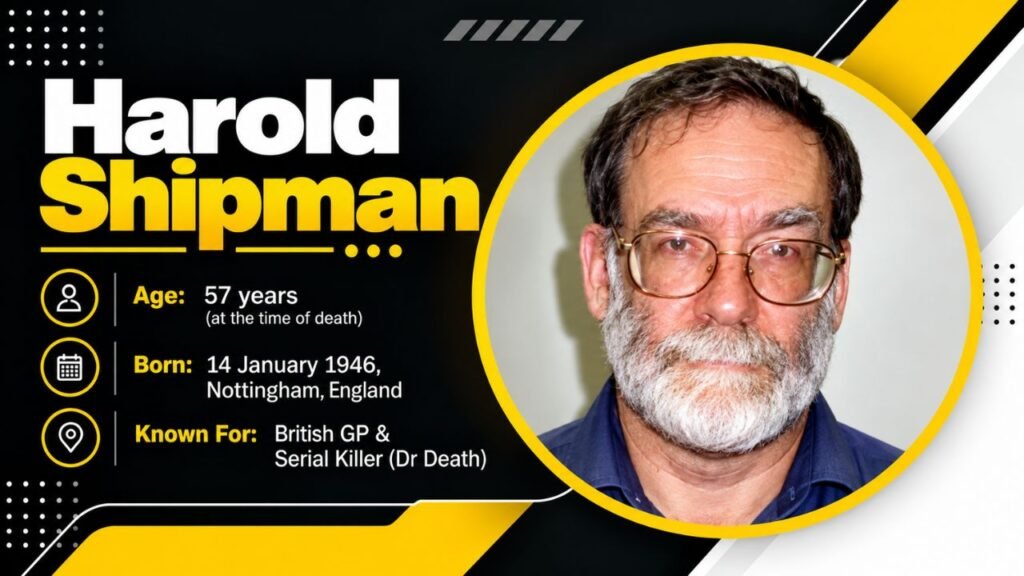
Harold Shipman is the name that changed British medicine forever. Known to the public as Dr Harold Shipman and to newspapers as “Dr Death”, he was a respected family doctor from Greater Manchester who turned out to be the most prolific serial killer in modern British history. More than two decades after his death, the Harold Shipman case is still studied by police forces, medical regulators, true-crime writers and filmmakers.
This guide pulls together the full story: Harold Frederick Shipman’s childhood and early life, his marriage to Primrose May Oxtoby, his career as a doctor, the victims, the trial, the Shipman Inquiry, his suicide, the debate over his motive, and the reforms that still protect patients today. It also covers the many documentaries, dramas and podcasts made about him.
Quick Facts: Harold Frederick Shipman at a Glance
| Detail | Information |
| Full name | Harold Frederick Shipman (known as “Fred”) |
| Born | 14 January 1946, Nottingham, England |
| Died | 13 January 2004, HM Prison Wakefield (aged 57) |
| Profession | General practitioner (GP) |
| Wife | Primrose May Oxtoby |
| Marriage date | 5 November 1966 |
| Children | Four (Sarah, Christopher, David and Sam) |
| Arrested | 7 September 1998 |
| Convicted | 31 January 2000, for 15 murders |
| Sentence | Life imprisonment, with a recommendation that he never be released |
| Estimated victims | About 250 (218 identified by the Shipman Inquiry) |
Harold Shipman’s Childhood and Early Life
Harold Frederick Shipman was born on 14 January 1946 on the Bestwood council estate in Nottingham. His father, also named Harold Frederick Shipman, was a lorry driver. His mother, Vera, was devoted to her son. The family was working class, and nobody in it had gone to university.
The Harold Shipman childhood is often described as ordinary, and in many ways it was. He was an accomplished rugby player and athlete in his youth, did well enough at school to be marked out as bright, and was known as a somewhat reserved, serious boy. Classmates later remembered him as a proud young man with a strong sense that he was destined for something better than his surroundings.
The Death of His Mother
The defining event of Shipman’s early life came when he was a teenager. His mother Vera developed lung cancer, and while he was preparing for his A levels he watched her decline. She died on 21 June 1963, when he was seventeen.
Biographers and psychologists have long pointed to one detail from those final weeks. Vera’s pain was eased by morphine injections given at home by her doctor. Shipman saw how the drug brought her peace, and he saw the authority a doctor held over life, pain and death. Whether this experience shaped what came later is one of the most debated questions in the whole Harold Shipman case, and we return to it in the section on his motive.
Harold Shipman’s Marriage: Primrose May Oxtoby and the 1960s Wedding
Readers searching for the Harold Shipman marriage date will find one answer repeated across reliable sources: Harold Shipman married Primrose May Oxtoby on 5 November 1966.
Their story began, according to later accounts, at a bus stop while Shipman was a student in Leeds. Primrose was a farmer’s daughter from the Wetherby area, a few years younger than him. She became pregnant, and the couple went ahead with the wedding in the 1960s, when she was still a teenager.
They went on to have four children: Sarah, Christopher, David and Sam. The family lived in the Greater Manchester area, and from the outside they looked like any other respectable doctor’s household.
The Shipman Family After the Arrest
The Shipman family faced an almost impossible position after 1998. Primrose stood by her husband throughout his trial and imprisonment, and she consistently maintained his innocence. Reports at the time of his death said that all four children remained loyal to him. They were widely understood to be among the few people who never accepted the verdict.
At the time of his death in 2004, Shipman was still married to Primrose. That means the marriage that started in November 1966 lasted just over 37 years, ending only when he died in his cell.
From Medical Student to Family Doctor
Shipman won a place at Leeds School of Medicine and qualified in 1970. He began his working life at Pontefract General Infirmary in West Yorkshire. Years later, the Shipman Inquiry would suggest that his killings may have started during this early hospital period, a chilling possibility that is still discussed.
In 1974 he became a general practitioner at a health centre in Todmorden, West Yorkshire. He was a well-regarded young GP, but in 1975 his career hit a crisis: he was caught forging prescriptions for the opioid pethidine, a drug he had been taking himself. He was convicted, fined, and spent time in treatment for his addiction.
What happened next shocks people to this day. Although the episode could have ended his career, the General Medical Council did not strike him off. After a period of rehabilitation he returned to medicine, and in 1977 he joined a practice in Hyde, Greater Manchester. In 1993 he set up his own surgery there.
By the 1990s, Dr Harold Shipman was a pillar of the Hyde community. Patients described him as caring, attentive and willing to make house calls. He appeared regularly on local television and radio talking about medicine. He was exactly the kind of GP people trusted with their lives.
How Harold Shipman Killed: What Did Harold Shipman Do?
If you have ever asked “what did Harold Shipman do?”, the short answer is this: he used his position as a trusted GP to murder patients, mostly elderly women, by giving them lethal injections of diamorphine (medical heroin). He then signed their death certificates himself, often recorded natural causes, and in many cases encouraged families to choose cremation.
The pattern was grimly consistent:
- Most victims were elderly, female and still fairly healthy
- Many died at home, often alone with Shipman, and frequently sitting in a chair, fully dressed
- Shipman was often the last person to see them alive
- He certified the cause of death himself, avoiding any report to the coroner
- Cremation, which destroys physical evidence, was common
The system at the time allowed this. One doctor could certify a death with little scrutiny, and the second signature required for cremation was, in practice, a formality.
The Victims of Harold Shipman
The Harold Shipman victims were ordinary people: grandmothers, widows, neighbours, women who volunteered and who looked forward to visits from their GP. According to the Shipman Inquiry, around 80 percent of those killed were women, and the age range was wide, though most were in their seventies and eighties.
The inquiry, chaired by Dame Janet Smith, identified 218 victims whom Shipman killed, with further deaths classed as suspicious and some cases left unresolved. In its overall findings it estimated that his total number of victims was around 250, which is why he is regarded as one of the most prolific serial killers ever recorded anywhere in the world. A tribute in the BMJ at the time of his death said he had killed at least 215 and possibly as many as 260.
Behind each figure was a family. The inquiry and the trial left hundreds of relatives dealing with grief, anger and the horror of realising that the doctor who comforted them at the funeral was the person responsible.
Kathleen Grundy: The Case That Unravelled Everything
The beginning of the end came with the death of Kathleen Grundy, an 81-year-old former mayor of Hyde, on 24 June 1998. Shipman had visited her that day, and he was the last person known to have seen her alive. He recorded her cause of death as old age.
Within days, things started to look wrong. Mrs Grundy’s daughter, Angela Woodruff, a solicitor, was shown a will that left her mother’s estate of about £386,000 to Shipman and excluded her and her family entirely. She immediately saw that the will looked fake and went to the police.
The Investigation: How Shipman Was Caught
In March 1998, a few months before the Grundy death, another local GP, Dr Linda Reynolds, had already raised concerns. Prompted by a worried local funeral director, she noticed the unusually high number of cremation forms for elderly women coming from Shipman’s practice. She reported her worry to the coroner. A police inquiry followed, but it was closed for lack of evidence, and tragically, Shipman went on to kill again.
After Woodruff’s complaint, police acted quickly:
- Mrs Grundy’s body was exhumed and found to contain diamorphine
- Shipman’s typewriter was seized, and forensic analysis connected it to the forged will
- His medical practice computer was examined, and investigators found he had altered patient records after the fact to make deaths appear natural. He did not realise that the system recorded the actual date of each change
- Police began looking into other deaths among his patients
Shipman was arrested on 7 September 1998. Detectives eventually selected a group of specimen cases from the many deaths and exhumed several patients, finding evidence of the same drug in a number of them.
The tapes of his police interviews have since featured in television programmes. In them, Shipman is calm, polite and controlled. He denied everything. His refusal to speak honestly about what he did would mark the rest of his life.
The Trial and Conviction
The trial began at Preston Crown Court in October 1999 and lasted about 57 days, making it one of the largest murder trials in British history. Shipman was charged with the murder of 15 women and the forgery of Mrs Grundy’s will. He did not confess and he did not give a motive. He gave evidence in his own defence and disputed the scientific evidence.
On 31 January 2000, the jury found him guilty on all counts. The trial judge sentenced him to 15 life sentences and recommended that he should never be released. He remains the only British doctor ever found guilty of murdering his own patients.
From the first day of his sentence, Shipman kept up the claim that he was innocent. He never expressed remorse, and he never confessed, either at trial, during the later inquiry or in prison.
The Shipman Inquiry
In 2001, the government launched a public inquiry led by High Court judge Dame Janet Smith. The Shipman Inquiry was one of the largest investigations of its kind. Over the following years it examined hundreds of deaths and produced six reports, the last of which was published in January 2005.
Shipman refused to cooperate with the inquiry. Even so, its findings were devastating:
- He had killed at least 215 patients at the time of its main findings, rising to 218 in the final account
- The earliest confirmed killings dated back to 1971
- The sixth report raised the disturbing possibility that he had also killed while working at Pontefract General Infirmary, including the possible death of a young child
- Many safeguards, from the GMC to the coroner system to the police, had failed to spot the pattern
The inquiry also made detailed recommendations about death certification, controlled drugs, GP regulation and the way the medical profession handles concerns about colleagues.
Harold Shipman’s Death and Cremation
On the morning of 13 January 2004, Harold Shipman was found hanging in his cell at HM Prison Wakefield, having used bedsheets tied to the window bars. It happened one day before his 58th birthday. He was pronounced dead a short time afterwards.
Prison authorities said he had shown no signs of suicidal intent beforehand. In the years since, there has been some discussion over why he did it. It was reported that he may have been thinking of his pension arrangements, which would have provided for his wife if he died before a certain age. There is no confirmed evidence of his reasons, and the real answer died with him.
His body was taken to a mortuary in Sheffield. According to reports at the time, his family had some doubts about the circumstances, and the inquest was held in 2005. It was reported in 2005 that Shipman’s body was cremated in March of that year, away from public attention. His widow was reportedly advised against burial, because of fears that a grave might be targeted or desecrated.
A memorial garden for his victims was opened in Hyde in July 2005, a quiet place for families to remember the people he took from them.
What Was Harold Shipman’s Motive?
The most common question about the case is also the hardest: why did he do it?
Shipman never offered an explanation, so every theory is speculation. The main ideas that experts, journalists and psychologists have put forward are these.
1. The trauma of his mother’s death. He saw his mother’s suffering ease after morphine and watched her die while a doctor controlled it. Some believe he was repeating that scene, with himself in the role of the powerful doctor. Others warn that this is too neat an explanation, since many people lose a parent without becoming killers.
2. A need for control and power. A common view among those who studied him is that Shipman craved authority over life and death. A CNN report at the time of his death described him as having a very dominant personality who liked to “play god”. Such characterisations are opinions, not clinical diagnoses.
3. Experiments that escalated. Some commentators suggested that early incidents may have been a kind of experiment that gradually turned into repeated killing.
4. Financial gain. The forged will for Kathleen Grundy showed he was willing to seek money, but financial gain does not explain the hundreds of other deaths, in which no payment was involved.
5. Drug addiction and professional failure. His earlier opioid addiction and the 1975 conviction are sometimes raised, although there is no evidence directly linking them to the killings.
The BMJ’s obituary captured the problem well, saying that most explanations for why he killed are probably too simple and too glib. The honest conclusion is that we do not know, and probably never will.
Harold Shipman’s IQ
Some websites and videos quote a figure for Harold Shipman’s IQ, and online lists of “smartest serial killers” often include him. However, there is no verified official record of any IQ test result in the public inquiry findings, so any number you see online should be treated with caution. What is clear is that he was intelligent enough to qualify as a doctor, to build a successful practice and to manipulate records, colleagues and patients for decades.
Harold Shipman in Photos: Portrait, Mugshot and Images
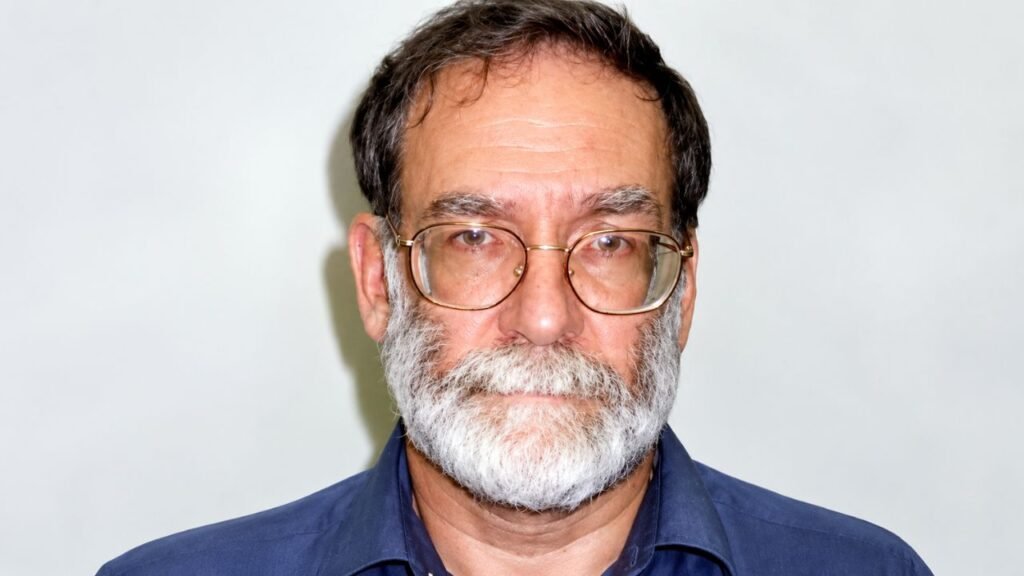
People searching for a Harold Shipman photo, portrait or mugshot are usually looking for the images that were widely published around 1998 and 2000. The best-known pictures show him as an older man with grey hair, a white beard and glasses, wearing a suit in police custody, or in formal portraits from his time in practice. These images are held by news agencies and archives, and they are used in documentaries and news coverage. For research or publication, it is best to go to a licensed archive rather than copying pictures from random websites.
Reforms After Shipman: How Britain Changed
The Harold Shipman case forced real change in how deaths are recorded and checked in England and Wales. The most important recent development is the arrival of a statutory medical examiner system.
- The Shipman Inquiry first recommended independent scrutiny of deaths in its third report in 2003
- A non-statutory medical examiner service began operating in NHS hospitals from 2019
- On 9 September 2024, the new statutory framework came into force in England and Wales. Every death that is not referred to a coroner must now be independently scrutinised by a medical examiner before it can be registered
- The reforms also introduced a new, standard medical certificate of cause of death
Other changes since the case include tighter regulation of controlled drugs, closer monitoring of GP prescribing and a stronger system for revalidating doctors. The effects of the case are sometimes called the “Shipman effect”, because after the crimes came to light, patient trust, medical regulation and the whole approach to clinical governance had to be rethought.
Medical examiners are not a perfect solution, and commentators have noted that resources and capacity are a real challenge. Still, the principle is the one the inquiry argued for: no doctor should be able to certify a death without someone independent checking it.
Harold Shipman in Film, TV and Podcasts
The story has been told many times. Here is a guide to what is available, bearing in mind that streaming rights change often and vary by country.
Dramas and Movies
A well-known television drama about the case, in which actor James Bolam played Shipman, was made for ITV in the early 2000s. People looking for a Harold Shipman movie will usually find this drama or one of the many documentary-style productions rather than a cinema feature.
Documentaries
- Harold Shipman: Doctor Death, an ITV documentary made by Wild Pictures, which talks to the detectives involved and uses video and audio from the police interviews
- The Shipman Files: A Very British Crime Story (Sky, 2020), directed by Chris Wilson, which looks back on the case and the largest murder trial in British history
- Killer Doctor: The Harold Shipman Case, a shorter documentary of around 50 minutes available on platforms such as Magellan TV and Prime Video in some regions
- Several true-crime television series have covered him in episodes, and many people search for titles like “Harold Shipman: Driven to Kill” for this reason
If you are looking for a Harold Shipman documentary on Netflix, note that as of October 2026 there is no dedicated Netflix documentary on him that could be confirmed in searches. Netflix catalogues change by region and by month, so check the app directly.
Podcasts
There are plenty of Harold Shipman podcasts, from long-form true-crime shows to investigative series that speak with relatives and medical experts. A good podcast about the case will centre the victims, explain the system failures clearly and avoid glorifying the killer.
Interviews
There is no confession interview with Shipman. The only extended recordings are the police interviews from 1998, in which he denies everything, and parts of these have been used in documentaries. Interviews with detectives, investigators, funeral workers, family members and Dame Janet Smith’s team are generally the most informative.
Why the Harold Shipman Case Still Matters
The case is not just a tale of one monstrous individual. It is a story about trust, and how easily systems fail when everyone assumes the person in authority is honest. The funeral director, the GP who raised the alarm and the families who sensed something was wrong were not mistaken; the structures around them simply did not respond fast enough. Above all, it is a story about the people who died, and the relatives who spent years searching for answers.
Conclusion
The story of Harold Shipman is one of betrayal, failure and, eventually, reform. A doctor who looked like a model of public service used his position to end hundreds of lives, and for years nobody stopped him. His childhood and early life offer clues but no answers, the marriage date of 5 November 1966 and his family life show how ordinary he appeared, and the long list of victims shows the real scale of what happened.
The best way to approach the Harold Shipman case today is with respect for those who died. The reforms that now require every death in England and Wales to be independently checked are their lasting legacy.
Check Also: Charles Manson | Jeffrey Dahmer | Myra Hindley | Christa Pike
Frequently Asked Questions About Harold Shipman
Harold Frederick Shipman (1946-2004) was an English GP convicted of murdering 15 patients. A public inquiry found he killed around 250 people over nearly three decades.
They married on 5 November 1966.
The Shipman Inquiry identified 218 victims and estimated about 250 in total.
He gave elderly patients lethal injections of diamorphine and then signed their death certificates himself.
He was arrested on 7 September 1998 after the death of Kathleen Grundy, and convicted on 31 January 2000.
He took his own life in HM Prison Wakefield on 13 January 2004, one day before his 58th birthday.
Yes. He was reportedly cremated in Sheffield in March 2005.
It was never established. He never confessed, and every theory remains speculation.
No dedicated Netflix documentary could be confirmed as of October 2026. Documentaries are available on ITV, Sky and other streaming services.
Source: FBI, Law Records