Washington State has seen plenty of grim chapters, but few cast a shadow as long as the Green River murders. Starting in 1982, young women kept vanishing along the highway strip south of Seattle, and for close to twenty years nobody could say who was taking them. When the answer finally came, it was almost insulting in its ordinariness: a man who spent his days spray-painting trucks, sat in church on Sundays, and had already been questioned by police more than once.
Gary Ridgway admitted to the killings in 2003 and avoided execution by cooperating. The story did not end there, though. In September 2024 he was quietly shuttled from his Walla Walla cell to a jail in Seattle, and the reason stayed sealed for months. Then, in December 2025, a Seattle radio station claimed he was dying in prison, which the state flatly denied. He is 77 now, and the biggest unanswered question is the one that has hung over this case from the start: how many women did he really kill?
What follows is a plain account of who he is, what he did, how investigators finally got him, and what we know about his situation today.
Case Snapshot
| Detail | Information |
| Full name | Gary Leon Ridgway |
| Known as | The Green River Killer, the Green River Strangler |
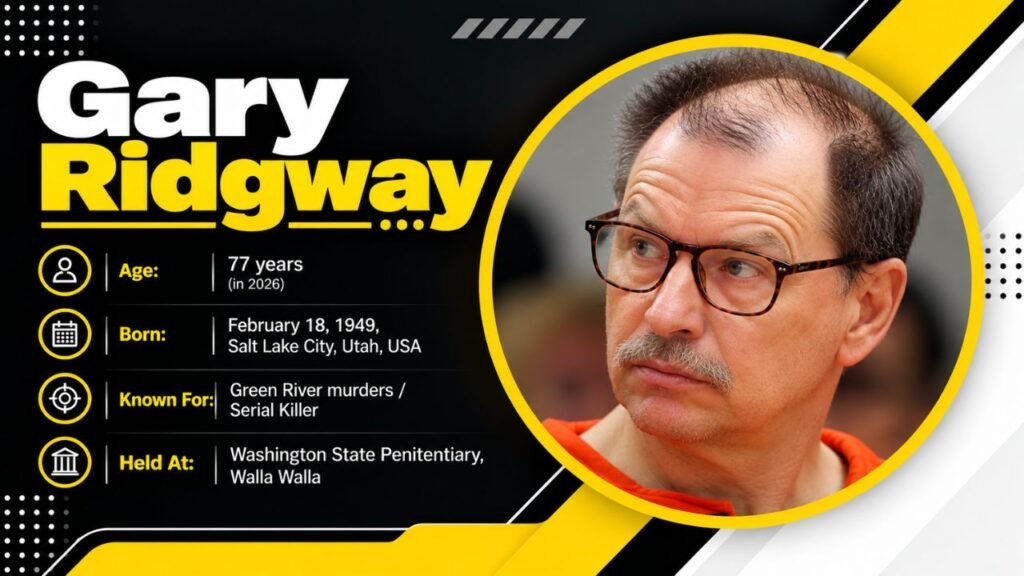
| Born | February 18, 1949, Salt Lake City, Utah (77 years old in 2026) |
| Day job | Truck painter at Kenworth in Renton, Washington, for roughly 30 years |
| Arrested | November 30, 2001, in Renton |
| Convictions | 49 counts of aggravated first-degree murder (48 in 2003, one more in 2011) |
| Sentence | Consecutive life terms with no chance of parole |
| His own estimate | At least 71 victims, possibly more |
| Where he is held | Washington State Penitentiary, Walla Walla |
| Marriages | Three |
| Son | Matthew |
| Death penalty | Taken off the table by a 2003 plea deal |
Who Is Gary Ridgway?
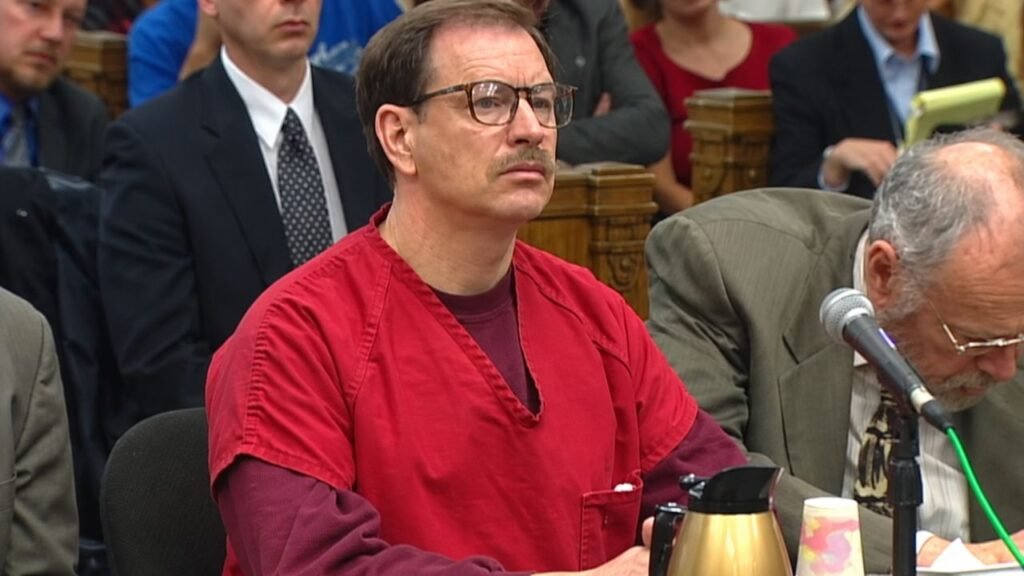
Ask most people who Gary Ridgway is and you will get a one-line answer: a serial killer from Washington. The man himself was harder to pin down. He was born in Salt Lake City and raised in the blue-collar neighborhoods along the Pacific Highway near Seattle, the same stretch of road he would later use as his hunting ground. His father drove a bus, he had two brothers, and the household was reportedly a tense one.
School did not go well for him. He fell behind, repeated grades, and was widely treated as a slow student. His IQ is usually quoted at about 82, a number that comes up in nearly every profile. It matters less as a statistic than as an explanation for how he was seen. People underestimated him, and that blind spot protected him for years.
Gary Ridgway’s Childhood
One episode from his teens deserves attention because it was a flashing red light that nobody really acted on. When he was 16, Ridgway coaxed a six-year-old boy into the woods and stabbed him. The boy survived. Ridgway later talked about it with little visible regret, and no serious intervention followed.
After finally finishing high school, he joined the Navy and served aboard a ship during the Vietnam era. Back in Washington he landed at the Kenworth truck plant in Renton and stayed for about thirty years. From the outside, it looked like a steady, forgettable working life.
Gary Ridgway’s Parents
Thomas and Mary Ridgway show up often in the psychological write-ups, though you should read those with some skepticism, since much of it traces back to Ridgway’s own words after he was arrested. His father reportedly grumbled about sex workers he saw from his bus, and analysts have linked that to the hatred Ridgway later voiced. His mother is usually described as overbearing. None of this explains his crimes, and plenty of people grow up in difficult homes without hurting anyone.
Gary Ridgway’s Wife and Marriages
Ridgway was married three times. The first marriage started around 1970 and was over within a couple of years. The second, to Marcia Winslow, gave him a child. The third, to a woman named Judith, began in 1988 and was still going when police arrested him in 2001. People who knew him used words like odd and friendly. He was also intensely religious, to the point of knocking on doors to preach. That gap between the pious public man and the private one is a big part of why the case still unsettles people.
Gary Ridgway’s Son
Matthew Ridgway, his only son, was a small child when the killings began. Ridgway sometimes held up a photo of the boy in front of the women he approached, using the picture to seem safe. Online searches for the Gary Ridgway son tend to ask whether Matthew stayed in touch with him. There is almost nothing reliable on that. Matthew has never been accused of anything, and he has stayed out of the public eye, which is about as much as can honestly be said.
What Did Gary Ridgway Do? Inside the Green River Murders
The name comes from where the first bodies surfaced. In July 1982 a young woman’s remains were found in the Green River in King County, and over the next several months more turned up in and around the water. Detectives quickly understood they were chasing one offender. More discoveries followed in forests, ravines and roadsides throughout the Seattle-Tacoma area.
Most of the victims were teenagers and women in their twenties. Many had run away from home, were living on the street, or worked the Pacific Highway South strip near the airport. Ridgway strangled them, and he often went back to the places where he left them. He said himself that he picked women he figured nobody would come looking for in a hurry.
The Green River Task Force grew into one of the biggest homicide investigations the country had ever seen. It pulled in detectives, scientists, behavioral experts, and, in a twist few would have predicted, a prisoner in Florida.
How Many People Did Gary Ridgway Kill?
There is no single clean number, so here is how it breaks down.
- What the courts confirmed: 48 guilty pleas in 2003, followed by a 49th conviction in 2011 for the 1982 death of Rebecca “Becky” Marrero, once prosecutors had enough corroboration to charge it.
- What he claimed: At least 71 killings. In later interviews with a reporter he reportedly floated a range of 75 to 80.
- What investigators believe: Dave Reichert, the former King County sheriff who worked the case for decades, has put the likely total somewhere around 65 to 70.
If you want a short answer to how many victims Gary Ridgway had, it is 49 proven, with the true figure very probably higher. Some of the missing may never be named.
Gary Ridgway’s Victims
They were daughters, sisters, mothers and friends, aged from their early teens into their thirties. Wendy Stephens, just 14, is among the youngest known; she was not identified by name until 2020, almost forty years after she died. Marcia Chapman, Opal Mills, Cynthia Hinds and Carol Christensen were the women whose cases supplied the physical evidence that led to his arrest.
Many remains sat unidentified for decades. Advances in DNA work and genetic genealogy have since attached names to a number of them, and a spokesperson for the King County Sheriff’s Office has said that every one of his known victims now has a name. For families who waited a lifetime, that counts for a great deal, even though nobody can rule out women who were never found.
How Was Gary Ridgway Caught?
His capture gets told as a win for science, and it was. It also involved several near misses.
Police looked at him early. Detectives talked to Ridgway in the early 1980s, and he reportedly passed a polygraph in 1984. By 1987 his truck resembled one a witness had described, so investigators collected hair and saliva samples from him. The technology of the day could not do much with them, so they were filed away.
A killer in Florida weighed in. In 1984 Ted Bundy, then on death row, spoke with the task force about how an offender like this might think. His comments did not point to Ridgway, but they gave detectives a sense of the mind they were after.
DNA finished the job. In 2001, King County detectives sent the old evidence back for testing with modern methods. The 1987 saliva sample lined up with biological material tied to several victims. On November 30, 2001, Ridgway was arrested in Renton, reportedly right after a shift at Kenworth. He was first charged in four deaths.
So if you are wondering how did Gary Ridgway get caught, the compact version is that a swab taken in 1987 waited fourteen years in storage until the science improved. Reichert, who was assigned to the case in 1982 and later became sheriff, was among the people who insisted on the retesting.
Gary Ridgway and Ted Bundy
People love to put these two side by side, and they could hardly be more different. Bundy was polished, educated and constantly on the move. He was executed in 1989 after confessing to roughly 30 murders. Ridgway was a plain-looking laborer who stayed in the same region for decades. In terms of confirmed convictions, he went past Bundy, and for a long time held the title of most prolific convicted serial killer in the United States. That record was eventually overtaken when the FBI credited Samuel Little with 60 confirmed murders.
Gary Ridgway’s Truck
There are really two truck stories. Ridgway painted trucks for a living at Kenworth. Separately, the vehicle he drove in the 1980s caught investigators’ attention after a witness described one much like it. Prosecutors said he relied on his own vehicle, along with his harmless appearance, to get close to the women he killed. What sticks is how normal everything about him looked.
The Plea Deal and Sentence
Prosecutors had a real dilemma. They had solid forensic evidence in only a few cases, while Ridgway was hinting at many more. In 2003, King County Prosecutor Norm Maleng made an offer: plead guilty, describe the crimes, and lead detectives to remains, and the state would not seek execution.
Ridgway entered his pleas in November 2003 and was sentenced the next month to life without parole on every count. People still argue about that bargain, but it delivered answers that otherwise might never have surfaced. It also contained a clause obligating him to plead guilty to future King County cases whenever his confession could be backed by reliable evidence, and that clause is how the 2011 Marrero conviction came about.
Maleng said back then that the mercy in the deal was meant for the families, not for Ridgway. At the 2011 hearing, the judge who handed down his 49th consecutive life term told him she could find no compassion for him.
Gary Ridgway Today: Is He Still Alive?
These days most people searching his name want one thing. Is Gary Ridgway still alive? Going by the reporting available as of October 8, 2026, he is. No reputable outlet has reported his death and the Washington Department of Corrections has not announced one. Be wary of anything that says otherwise, because rumors about him spread fast.
Where Is Gary Ridgway Now?
He is in the Washington State Penitentiary in Walla Walla, where he has served most of his sentence. His life terms carry no possibility of release, so parole is not an option, and neither is compassionate release to a hospice.
Is Gary Ridgway Still in King County Jail?
No. In September 2024 he was booked into the King County Jail on what was called an institutional hold. Nobody explained why, and the court order behind the move was sealed. A few days later he was back in Walla Walla. Eventually a judge ordered the paperwork opened, and it showed that detectives had taken him out so he could try to guide them to remains they had not yet found. Ridgway has said for years that he never showed investigators every site.
As far as the coverage I reviewed shows, no new victim was publicly announced as a result. The King County Prosecuting Attorney’s Office pointed out that each time his name is in the news it retraumatizes his victims’ families, which is exactly why that surprise transfer hit them so hard.
Gary Ridgway’s Health and Age
How old is Gary Ridgway? He was born on February 18, 1949, so he turned 77 this year. His health is the subject of constant chatter. In December 2025, KIRO Newsradio reported that five unnamed sources said he was receiving end-of-life care at Walla Walla. The Department of Corrections replied that these were inaccurate rumors, that his condition had not changed, and that someone serving life without parole cannot be released to hospice anyway.
Medical privacy law restricts what the department can disclose, so the public never gets the full picture. The fair summary: reports of decline surfaced in late 2025, officials disputed them, and no death has been confirmed.
Reichert, asked about the reports, called Ridgway a pathological liar and predicted he would carry a lot of secrets to the grave. That is why his health is more than morbid curiosity. If he does know where other victims are, the time for telling someone is running short.
Gary Ridgway in 2025 and 2026
The last two years can be laid out quickly:
- September 2024: Ridgway is booked into King County Jail and sent back to Walla Walla within days.
- 2025: A judge unseals the transport order and the search for more remains becomes public.
- December 2025: Reports of end-of-life care appear and are denied by the state.
- 2026: The case stays in circulation through documentaries and podcasts, including a four-part series on the Tacoma-area murders that aired in July.
Gary Ridgway’s Mugshot and Physical Description
The mugshot draws attention mostly because he looks so unremarkable in it. The best-known booking photo comes from 2001 and shows a middle-aged man with glasses and tidy hair. A newer photo from the 2024 jail booking made the rounds online and showed how much time had changed him.
On height, I could not find an official figure in court coverage. Unofficial profiles describe him as roughly average, so treat any exact number you see as unconfirmed.
Documentaries and Books About Gary Ridgway
Plenty of material exists if you want to go deeper:
- Green River Killer: Mind of a Monster (2020): A documentary directed by Nick Poyntz, built on interviews with investigators and a close look at why he stayed free for so long.
- Morbid podcast (July 2026): A four-part retelling of the Tacoma-area killings and the hunt for the culprit.
- The Riverman by Robert Keppel: A book covering the Bundy conversations and the search for the Green River Killer.
- Chasing the Devil by Dave Reichert: The account of the detective who later became sheriff.
For anyone looking for a Gary Ridgway documentary to start with, the 2020 film is the one most often recommended.
Why the Case Still Matters
Three larger arguments run through it. One is about how police and the public treat women on society’s margins, especially the young, the home less and those in the sex trade. Critics say the early response was sluggish in part because of who the victims were.
Another is the plea bargain. Letting a man who confessed to dozens of killings escape execution remains one of the most contested deals in American criminal law. Defenders point to the remains recovered and the answers given to families, while opponents say the price was too steep.
The last is forensic science. That 1987 saliva swab is a textbook example of why evidence gets kept, and today’s genealogy methods for naming unidentified remains grew out of the same conviction that no case is truly closed.
Check Also: Charles Manson | Jeffrey Dahmer | Myra Hindley | Christa Pike
Frequently Asked Questions
The American serial killer known as the Green River Killer, convicted of 49 murders in Washington State.
Gary Leon Ridgway.
Yes, as of October 8, 2026, no confirmed report of his death has been published. Claims in December 2025 that he was in end-of-life care were disputed by the Washington Department of Corrections.
In the Washington State Penitentiary in Walla Walla.
Yes. He is serving consecutive life sentences with no parole and no release.
He was arrested on November 30, 2001, after DNA evidence tied him to several victims.
He was convicted of 49 murders, said he killed at least 71, and investigators suspect the real figure is higher.
Life without parole on each count, served consecutively, after a 2003 plea agreement that removed the death penalty.
He turned 77 in February 2026.
Yes, Matthew, born during his second marriage. Very little about his adult life is public.
Three.
Unsealed documents showed detectives took him there to try to locate more victims’ remains.
Most of his life was spent south of Seattle near the Pacific Highway, and he worked in Renton.
Not directly. Bundy gave investigators general insight in 1984, but DNA is what identified Ridgway.
Source: WikiPedia