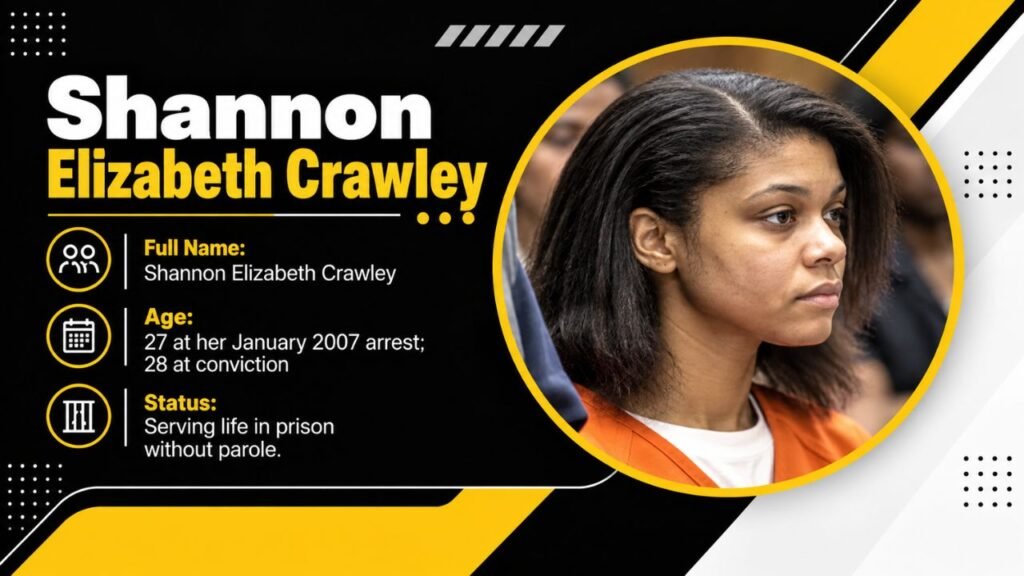
Few North Carolina courtroom stories in recent memory have carried the mix of small-town love triangle, secret affair, and police-department insider access that surrounded the trial of Shannon Elizabeth Crawley. On February 22, 2010, a Durham County jury found the 28-year-old guilty of first-degree murder for her role in the January 2007 killing of NCCU graduate student Denita Monique Smith. Judge Ronald Stephens then imposed the only sentence North Carolina law allows in that situation: life in prison without the possibility of parole.
The case took more than three years to reach a verdict, moving from a shooting outside a Durham apartment complex through a slow-building investigation, a jailhouse-recorded phone-call dispute, and finally a two-week jury trial in the winter of 2010. Along the way, the case drew in one more central figure — Greensboro police officer Jermeir Stroud, the victim’s fiancé and, according to trial testimony, Crawley’s former lover – whom prosecutors never charged in connection with the killing.
Case Snapshot
| Detail | Information |
| Full name | Shannon Elizabeth Crawley |
| Age | 27 at her January 2007 arrest; 28 at conviction |
| Charge | First-degree murder |
| Verdict | Guilty, February 22, 2010 |
| Sentence | Life in prison without parole |
| Victim | Denita Monique Smith, age 25 |
| Killing | January 4, 2007, at Campus Crossing Apartments, Durham, NC |
| Prior occupation | 911 dispatcher, Guilford Metro 911, Greensboro |
| Judge | Ronald Stephens, Durham County Superior Court |
| Key figure (uncharged) | Jermeir Stroud, Greensboro police officer, victim’s fiancé |
| Bond (pretrial) | $175,000 |
| Appeal | Conviction and sentence affirmed, NC Court of Appeals, 2011 |
Who Is Shannon Crawley?
Shannon Elizabeth Crawley is a Greensboro-area woman who, before 2007, was not a public figure in any conventional sense. She wasn’t a public personality of any kind – just a single mother of two working as a 911 dispatcher. She became known to the public almost entirely because of her alleged role in Denita Smith’s death and the years-long prosecution that followed.
Crawley was 27 when the shooting happened and is now serving her sentence in the North Carolina prison system. Coverage of the case has consistently described her as the other woman in a love triangle involving a Greensboro police officer – not someone with a personal grievance against a stranger, but a former lover who, prosecutors argued, could never fully let go of the relationship once it moved on without her. That’s the throughline of virtually every article, courtroom recap, and true-crime episode published about her: Shannon Crawley, the jealous ex, versus Denita Smith, the student who by every account never knew a rival existed.
Before any of that reached a courtroom, though, Crawley had already built a decade-long career in emergency dispatch – a detail that would end up shaping how investigators, and later the public, read her composure throughout the case.
Shannon Crawley Arrested: The 2007 Investigation
The story of Crawley’s arrest unfolds along a single, fairly compressed timeline. On January 4, 2007, an assailant shot Denita Smith once in the back of the head at the Campus Crossing Apartments near NCCU in Durham; she then fell down a stairwell, where a maintenance worker found her body. Investigators didn’t have an immediate suspect, and for the first hours the case moved on little more than a fiancé’s worried phone calls.
According to reporting from the time, detectives reached Smith’s fiancé, Jermeir Stroud – a Greensboro police officer – almost immediately, since he had been trying to reach Smith that morning and was already on his way to Durham when he learned something had happened at the complex. That conversation, and the ones that followed, eventually pointed detectives toward Crawley.
Five days after Smith’s murder, Durham police arrested Crawley and charged her with first-degree murder. She was held without bond at the Durham County Detention Center before ultimately making bail four months later on a $175,000 bond.
Quick timeline of the arrest phase:
- Jan. 4, 2007 – Denita Smith shot and killed at Campus Crossing Apartments, Durham
- Jan. 9, 2007 – Shannon Crawley arrested and charged with first-degree murder
- Jan. 2007 – Crawley suspended from her dispatcher job after being named a person of interest
- May 2007 – Crawley makes bail on a $175,000 bond
- Apr. 2, 2007 – Durham County Grand Jury formally indicts Crawley for Smith’s murder
Shannon Crawley and Denita Smith: How the Two Were Connected
The core allegation against Crawley was never that she had an independent grudge against a stranger. Prosecutors’ theory, laid out consistently from her arrest through the trial itself, was that Crawley and Stroud had carried on a years-long affair that predated his engagement to Smith, and that Crawley never fully let go of the relationship even after it ended.
According to testimony and reporting on the case, the relationship began as a friendship between two people working emergency-dispatch roles connected to the Greensboro Police Department, and it turned sexual toward the end of 2004. During the affair, Crawley became pregnant and later had an abortion – a detail Stroud said effectively ended the physical side of the relationship about a year before Smith’s death, though Crawley’s own account suggests the emotional entanglement didn’t end there.
Investigators didn’t believe the graduate student ever knew about her fiancé’s secret relationship. Multiple people close to the case have said that if Smith had even suspected anything, she would have ended the engagement immediately. Crawley, by contrast, knew exactly who Smith was – and, prosecutors argued, resented her for it.
Key facts about the affair:
- Crawley and Stroud both worked in emergency dispatch roles connected to the Greensboro Police Department
- The relationship reportedly began as a friendship and turned sexual toward the end of 2004
- Crawley became pregnant during the affair and later had an abortion
- Stroud said the abortion effectively ended the physical relationship about a year before Smith’s death
- Investigators believe Denita Smith never knew about Stroud’s relationship with Crawley
- Crawley lived only blocks away from Stroud at the time of the murder
Shannon Crawley Trial: A Day-by-Day Breakdown
Crawley’s murder trial began in Durham County Superior Court in February 2010, more than three years after Smith’s death, and ran for roughly two weeks under Judge Ronald Stephens. The trial had already been delayed twice before finally getting underway.
| Trial Day | What Happened |
| Opening statements | Prosecution lays out jealousy-and-stalking theory; defense argues Stroud was the real shooter |
| Prosecution’s case | Phone records and witness sightings placing Crawley near Campus Crossing Apartments introduced |
| Videotaped police interview | May 2007 interview of Crawley played for jurors, in which she claims Stroud threatened her children |
| Defense’s case | Crawley testifies in her own defense, denies shooting Smith, says she didn’t even know the victim |
| Crawley’s testimony | She testifies she was pregnant with Stroud’s child months before the murder and had terminated the pregnancy |
| Mistrial motion | Defense moves for mistrial after jurors hear phone calls not formally entered into evidence; motion denied |
| Recorded calls | Jury listens to recordings allegedly between Smith’s fiancé and Crawley, including a whispered admission on one call |
| Deliberations | Jury deliberates roughly seven hours over two days |
| Verdict | Guilty of first-degree murder, February 22, 2010 |
| Sentencing | Life without parole imposed immediately by Judge Stephens |
Evidence and testimony introduced at trial:
- Phone records and witness sightings placing Crawley near Campus Crossing Apartments
- A videotaped May 2007 police interview of Crawley
- Recorded phone calls allegedly between Crawley and Stroud, including a whispered admission on one call
- Crawley’s own testimony describing a gunpoint drive to Durham
- Testimony from Stroud that he dated both women at the same time
- Absence of DNA, a recovered murder weapon, or forensic evidence linking Crawley directly to the shooting
Shannon Crawley Sentenced: Life Without Parole
Because North Carolina law mandates a fixed outcome for a first-degree murder conviction outside of a death-penalty case, the jury’s verdict effectively decided Crawley’s sentence the moment they reached it. Judge Ronald Stephens sentenced her to life in prison without the possibility of parole – the only sentence available under the circumstances. Crawley reportedly said nothing when offered the chance to address the court before sentencing.
That combination – a first-degree murder conviction, no death-penalty request from the state, and an automatic life-without-parole sentence – is consistent with how North Carolina handles this category of case, and it lines up cleanly with everything independently confirmed about the trial’s charges and structure. Denita Smith’s mother, Sharon Smith, addressed Crawley directly at sentencing, telling her that her family now lived with a permanent void and that forgiveness wasn’t something she could offer yet.
Crawley’s family maintained her innocence throughout, and continued to do so after the verdict. Her father, Keith Crawley, told reporters he intended to keep pushing to prove Stroud’s involvement, while her mother, Anne Crawley, argued publicly that her daughter had effectively become “the perfect victim” for a manipulative man.
shannon crawley children now
Crawley’s conviction is closely tied to one recurring detail: at the time of her arrest, she was raising two children on her own, both of elementary-school age. That fact became legally significant mainly through her own defense – Crawley testified that fear for her children’s safety was the reason she went along with Stroud on the morning of the murder, claiming he had threatened to kill them if she refused to accompany him to Durham.
Beyond that testimony, however, there is very little independently confirmed public reporting about Crawley’s children in the years since – their current ages, where they grew up, or their relationship with their mother following her 2010 conviction. That gap is worth being upfront about rather than filling in with speculation: searches for “Shannon Crawley children now” reflect real public curiosity, but the confirmed trial-era reporting doesn’t extend into what happened to her kids over the fifteen-plus years since sentencing.
What’s confirmed vs. unconfirmed about Crawley’s children:
- Confirmed: She was a single mother of two at the time of her 2007 arrest
- Confirmed: Both children were elementary-school-age in 2007
- Confirmed: Her claimed fear for their safety was central to her trial defense
- Unconfirmed: Their current ages, whereabouts, or any relationship with Crawley today
Where Is Shannon Crawley Now?
Because Crawley received a sentence of life in prison without the possibility of parole, her case carries no release date, and none is expected. The North Carolina Court of Appeals reviewed and rejected her direct appeal in 2011, affirming both the conviction and the sentence after finding no error that would have justified overturning the trial.
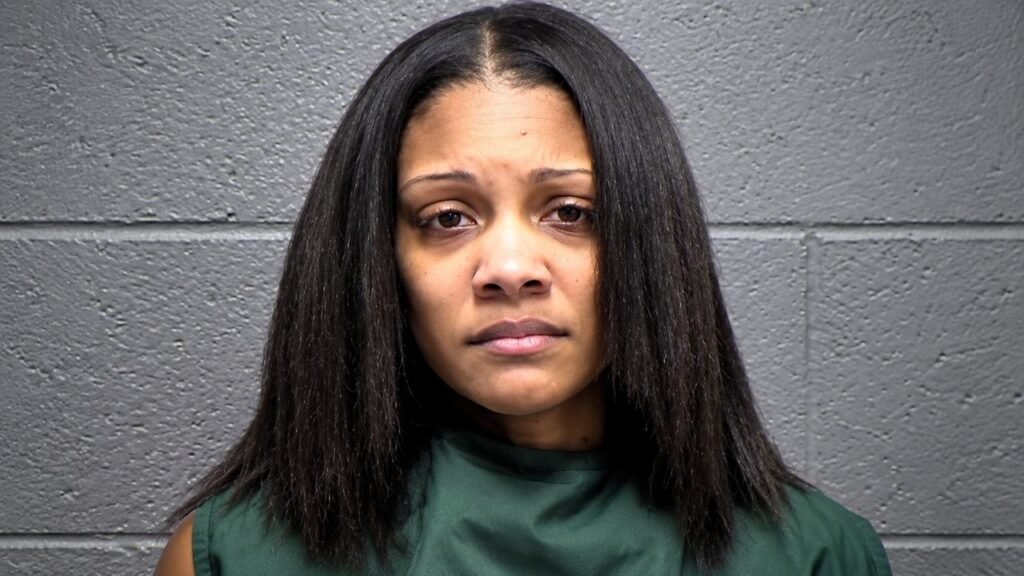
Inmate housing assignments can shift over time as the department periodically transfers people between facilities, so the most reliable way to confirm her present location is through the North Carolina Department of Adult Correction’s own public offender-search tool rather than an older archived listing.
| Field | Recorded Detail |
| Offender number | 0994267 |
| Status | Active / in custody |
| Custody agency | NC Department of Adult Correction |
| Facility (archived record) | Southern Correctional Institution |
| Sentence | Life without parole |
| Release date | None – not parole-eligible |
So, to directly answer the cluster of searches behind “shannon crawley now,” “shannon crawley release date,” and “where is shannon crawley today”: she is serving a life-without-parole sentence in the North Carolina prison system, with no scheduled release date because none exists under her sentence.
Who Was Denita Smith? A Brief Look at the Victim
It’s easy, in a case this heavy with love-triangle detail and courtroom twists, to lose sight of the person at the center of it. Denita Monique Smith was a 25-year-old graduate student at North Carolina Central University, originally from Charlotte, where she had grown up deeply involved in her church community. She had already earned a bachelor’s degree in English from NCCU and was working to finish her master’s thesis at the time of her death. Faculty and classmates described her as a star student with a bright future ahead of her.
Smith was engaged to Jermeir Stroud at the time he killed her, and by every account reviewed in courtroom coverage, she never knew her fiancé had a hidden relationship with another woman. University Park Baptist Church in Charlotte held her funeral, and her family has continued speaking publicly about her in the years since, both at trial and in subsequent true-crime coverage of the case. Whatever the eventual legacy of the case, Smith’s death is the fixed point the entire story revolves around – a young, promising graduate student killed in a stairwell over a relationship she wasn’t even aware of.
Why the Case Still Draws Attention
Beyond the underlying facts, the Crawley case has drawn sustained attention over the years largely because of how thoroughly it has been repackaged across true-crime media. Coverage from before the trial even began flagged the unusual dynamic at its core: a case built almost entirely on a hidden relationship, phone records, and a jealousy-driven theory of motive rather than physical evidence. That dynamic played out at trial itself, when jurors were shown recorded material and testimony establishing the affair in detail.
That evidentiary structure, combined with the presence of an uncharged police officer sitting at the center of both women’s lives, is part of why the case has drawn sustained local and national media attention well beyond a typical homicide prosecution. It has been featured on “Snapped,” “Dateline,” “Deadly Women,” and other true-crime programming, each retelling emphasizing a different angle of the same unresolved tension: a convicted killer who has never stopped naming someone else as the real shooter, and a family that has never stopped believing her.
True-crime coverage of the case includes:
- Snapped (2010)
- Dateline
- Deadly Women: Sugar and Spite
- See No Evil: Sex, Lies and Audiotape
- Fatal Attraction: Collegiate Killing
- Scorned: Love Kills
Key People in the Case
| Name | Role | Status |
| Shannon Crawley | Convicted of Smith’s murder | Serving life without parole |
| Denita Smith | Victim | Deceased |
| Jermeir Stroud | Smith’s fiancé; former lover of Crawley | Never charged |
| Ronald Stephens | Trial judge | Presided over 2010 trial and sentencing |
| Sharon & Calvain Smith | Denita’s parents | Addressed Crawley at sentencing |
| Keith & Anne Crawley | Shannon’s parents | Maintain her innocence |
Read Also: Richard Ramirez | Lil Durk Verdict | Al Capone
Frequently Asked Questions
She’s the former 911 dispatcher convicted in 2010 of first-degree murder for killing NCCU graduate student Denita Smith in January 2007.
Yes, according to prosecutors and trial testimony. Crawley had a years-long affair with Smith’s fiancé, Jermeir Stroud, that Smith reportedly never knew about.
January 9, 2007, five days after Denita Smith’s murder.
At the time of her arrest she was described as a single mother of two elementary-school-age children. Little has been independently confirmed publicly about them since her conviction.
Life in prison without the possibility of parole.
No. Her sentence carries no parole eligibility, and her 2011 appeal was denied.
She remains in custody with the North Carolina Department of Adult Correction; her exact facility should be confirmed through the department’s current public inmate-search tool.
Her direct appeal was decided in 2011, with the North Carolina Court of Appeals affirming both the conviction and the sentence.
Source: ABC 11 News