Every serial killers list starts with the same question: who belongs on it? Body count is one measure, but it isn’t the only one. Some offenders became household names through their crimes, their arrests, or the way they changed American law enforcement. This list of serial killers covers only the United States and ranks ten of the top serial killers by notoriety, victim count, cultural impact and influence on criminal investigation.
Each entry gives the facts of the case, how the killer was stopped, and what it taught investigators. The article closes with the latest US statistics, female serial killers, serial killers who were never caught, and a full FAQ. Data is current as of September 29, 2026.
A note on approach: Every name below represents real victims and grieving families. This article is meant to inform and educate, not to glamorize. Where sources disagree on a number, I say so.
Quick Overview: The Most Famous Serial Killers in the US
| Rank | Name | Nickname | Active | Known / claimed victims | Outcome |
| 1 | Ted Bundy | None | 1974–1978 | Confessed to 30 | Executed, 1989 |
| 2 | John Wayne Gacy | “Killer Clown” | 1972–1978 | 33 | Executed, 1994 |
| 3 | Jeffrey Dahmer | “Milwaukee Cannibal” | 1978–1991 | 17 | Killed in prison, 1994 |
| 4 | Gary Ridgway | “Green River Killer” | 1982–1998 | 49 convicted | Life without parole, 2003 |
| 5 | Samuel Little | None | 1970–2005 | Confessed to 93 | Died in custody, 2020 |
| 6 | Dennis Rader | “BTK” | 1974–1991 | 10 | Life terms, 2005 |
| 7 | Richard Ramirez | “Night Stalker” | 1984–1985 | 13 | Death sentence; died 2013 |
| 8 | Joseph DeAngelo | “Golden State Killer” | 1974–1986 | 13 murders | Life without parole, 2020 |
| 9 | Aileen Wuornos | None | 1989–1990 | 7 | Executed, 2002 |
| 10 | Zodiac Killer | “Zodiac” | 1968–1970s | 5 confirmed | Never identified |
1. Ted Bundy: The Killer Who Defined the Modern Image
| Active | Locations | Victims | Executed |
| 1974–1978 | Washington, Oregon, Utah, Colorado, Florida and other states | Confessed to 30 | January 24, 1989, Florida |
No list of famous killers can begin anywhere else. Ted Bundy was a law student with no obvious criminal history who came across as charming, intelligent and trustworthy. That is why he became the reference point for how people think about serial killers. He didn’t look like a monster, and he used that to approach victims, often by feigning injury or posing as an authority figure.
Bundy’s crimes spread across several states, which is significant. In the 1970s, police agencies rarely shared information across jurisdictions, and the gaps let him move on before patterns emerged. Police arrested him, but he escaped custody twice in 1977 and committed some of his most violent attacks in Florida in January 1978, including at a Tallahassee sorority house. Police recaptured him in February 1978, and a Florida court tried him and sentenced him to death.
Shortly before his execution he confessed to 30 homicides. The true number remains uncertain, and investigators have long suspected there were more.
Why he ranks first: Bundy reshaped public understanding of serial murder. His case drove greater interstate cooperation, contributed to the growth of behavioral profiling, and remains among the most studied cases in criminology. He is also a major reason Florida figures so prominently in serial-killer statistics.
2. John Wayne Gacy: The Killer Clown Next Door
| Active | Location | Victims | Executed |
| 1972–1978 | Illinois | 33 | May 10, 1994 |
Gacy was a Chicago-area contractor, a Democratic Party precinct captain, and a volunteer who performed as “Pogo the Clown” at children’s events. He was a familiar, active member of his community, and that contrast is what made his case so disturbing when it came to light.
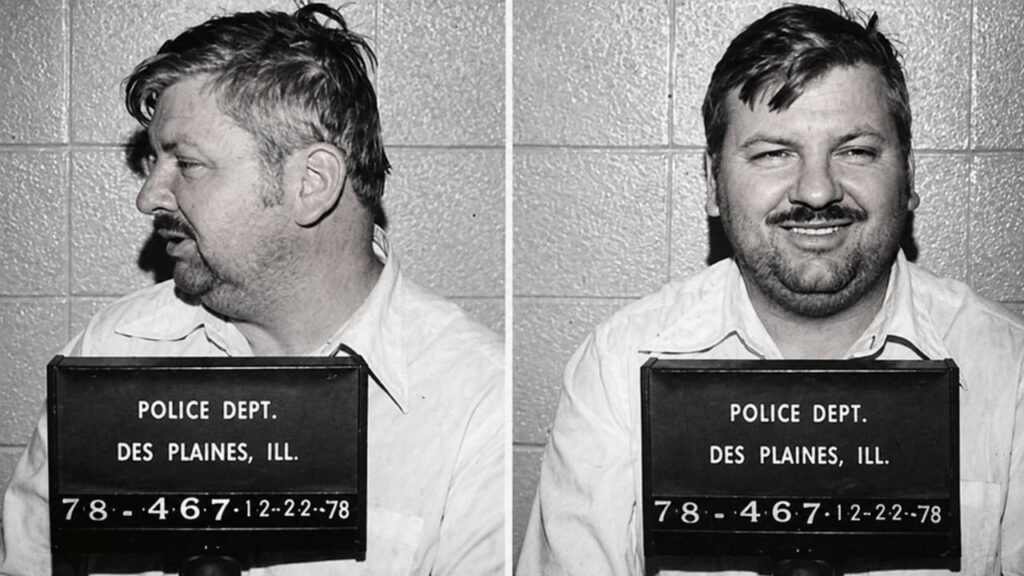
Gacy lured young men and boys, many of them teenagers, to his home in Norwood Park Township. Most of the 33 victims were buried beneath the house. The case broke open in December 1978 after the disappearance of a 15-year-old boy, Robert Piest, led police to Gacy. A search of his property revealed the burial site. He was convicted in 1980 of 33 murders and executed in 1994.
Why he ranks second: Gacy’s crimes showed how a prominent, well-liked community member can hide in plain sight. His case also exposed how the disappearances of young men, some of them runaways or marginalized youth, had been under-investigated.
3. Jeffrey Dahmer: The Milwaukee Case That Changed Police Practice
| Active | Locations | Victims | Killed in prison |
| 1978–1991 | Ohio and Wisconsin | 17 | November 1994 |
Dahmer committed his first murder in Ohio in 1978 and killed 16 more people, mostly young men, in and around Milwaukee. He was arrested in July 1991 when a potential victim escaped and flagged down police.
His case is one of the most examined failures of policing in modern American history. Earlier in 1991, officers returned a badly injured, apparently intoxicated teenager to Dahmer’s apartment after he dismissed their concerns. Dahmer later murdered the teenager. Investigators, journalists and critics subsequently scrutinized the response, and people still cite the case in debates about bias and negligence in police handling of missing-persons and welfare calls.
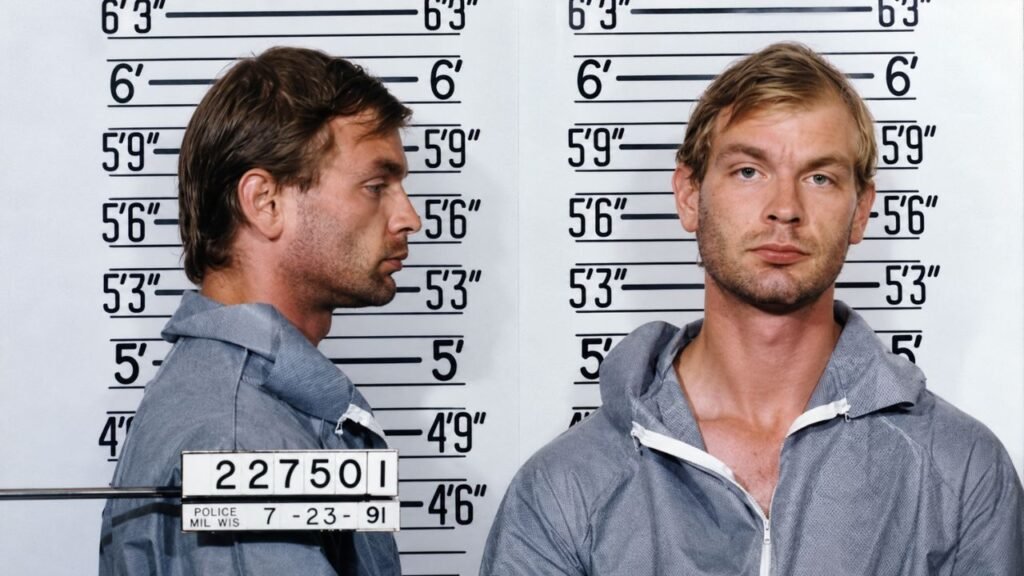
Dahmer pleaded guilty but insanee, and a jury found him sane and convicted him on 15 counts of murder in 1992. He was killed by another inmate in 1994.
Why he ranks third: Dahmer remains one of the most widely recognized names in American true crime, and his case has had lasting influence on debates about police accountability.
4. Gary Ridgway: The Green River Killer
| Active | Location | Victims | Sentence |
| 1982–1998 | Washington State | 49 convicted (he has claimed more) | Life without parole, 2003 |
Ridgway was a truck painter who targeted vulnerable women, many of them sex workers, in the Seattle area. For years, the Green River task force hunted an unknown offender while victims’ remains were found in and around the river and other locations. Ridgway became a suspect early on, but the evidence wasn’t enough at the time.
The turning point came in 2001, when advances in DNA testing linked him to several victims through preserved evidence. In 2003, he pleaded guilty to 48 murders in exchange for avoiding the death penalty, and a 49th conviction was added later. He has said he killed many more women, and investigators believe the true number is higher.
Why he ranks fourth: Ridgway is one of the most prolific convicted serial killers in American history by conviction count. His case became a landmark example of how preserved evidence can catch a suspect years later, and it showed how severely offenders can exploit gaps in the attention paid to marginalized victims.
5. Samuel Little: The Most Prolific Convicted Killer in US History
| Active | Locations | Victims | Died in custody |
| 1970–2005 | Multiple states | Confessed to 93 | December 2020 |
In 2019, the FBI described Samuel Little as the most prolific convicted serial killer in US history. He confessed to 93 killings across several states over more than 30 years.
Little’s victims were primarily marginalized women, including sex workers and people struggling with addiction. Authorities never investigated many of their deaths as homicides, and they attributed some to overdose or accident. Their cases went unsolved partly because society and the justice system paid them too little attention.
He was convicted in California in 2014 of three murders, after DNA evidence linked him to them. Then began confessing to law-enforcement investigators from Texas, who interviewed him at length. He also drew portraits of many victims from memory, which investigators used to identify and match cases. Authorities in numerous states worked to verify and close cases based on his statements.
Why he ranks fifth: In raw numbers, Little may top every other entry on this list. He ranks below better-known names only because his crimes received far less media coverage during their time, which is itself a central part of his story.
6. Dennis Rader (“BTK”): The Killer Who Wanted Attention
| Active | Location | Victims | Sentence |
| 1974–1991 | Wichita, Kansas | 10 | Consecutive life terms, 2005 |
Rader called himself “BTK,” short for “bind, torture, kill.” Over nearly two decades he murdered ten people in the Wichita area, then went quiet for years. Most notably, he sent taunting letters, poems and packages to police and news outlets.
He was a compliance officer for the city, a church council president and a Cub Scout leader. He was captured in February 2005 after he sent a floppy disk to a local TV station. Investigators recovered metadata from the disk that pointed to a church computer and to Rader himself. DNA evidence then confirmed the match, and he pleaded guilty.
Why he ranks sixth: BTK’s downfall is a case study in how digital forensics broke a case that had gone cold for a decade and a half. His need for attention and control became the trail that led to his arrest.
7. Richard Ramirez: The Night Stalker
| Active | Location | Victims | Outcome |
| 1984–1985 | Los Angeles and San Francisco Bay Area, California | 13 murders | Death sentence, 1989; died of natural causes, 2013 |
Ramirez terrorized California during the summer of 1985, breaking into homes at night and attacking residents. Fear spread rapidly across Southern California, and many residents bought guns, locks and dogs.
His capture came from an unusual source: a fingerprint recovered from a stolen car led to his identification, and police released his photograph to the media. Within hours, residents in East Los Angeles recognized him and chased him down until officers arrived.
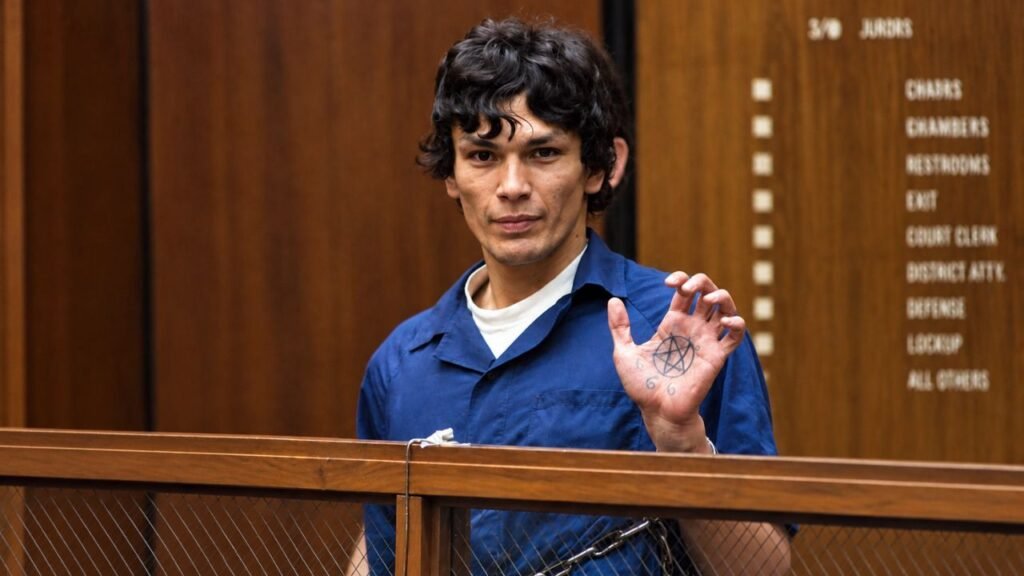
He was sentenced to death in 1989 and died in prison in 2013 while still awaiting execution.
Why he ranks seventh: The Night Stalker case demonstrated how quickly a community can turn public information into effective action, and how a single media release can accelerate an arrest.
8. Joseph DeAngelo: The Golden State Killer
| Active | Location | Victims | Sentence |
| 1974–1986 | California | 13 murders, plus dozens of rapes and burglaries | Life without parole, 2020 |
For more than four decades, investigators believed they were dealing with separate offenders: the Visalia Ransacker, the East Area Rapist and the Original Night Stalker. DNA work eventually showed they were the same man. That man was Joseph DeAngelo, a former police officer.
Investigators identified him in April 2018 through genetic genealogy, a method in which they upload crime-scene DNA to a public genealogy database and trace family trees back to a suspect. Once they had narrowed it down, they collected a discarded sample and confirmed the match. In 2020 he pleaded guilty to 13 murders and received life without parole.
Why he ranks eighth: DeAngelo’s arrest changed cold-case investigation. Since 2018, genetic genealogy has helped identify suspects in a large number of long-unsolved cases across the country, making the Golden State Killer case one of the most consequential in forensic history.
9. Aileen Wuornos: America’s Best-Known Female Serial Killer
| Active | Location | Victims | Executed |
| 1989–1990 | Florida | 7 men | October 9, 2002 |
Aileen Wuornos is the best known of the female serial killers in American history, and she stands out for a reason: women account for a small minority of known serial offenders. Wuornos shot seven men along Florida highways between 1989 and 1990. She said she was a sex worker who acted in self-defense, but prosecutors and courts did not accept that account for all seven cases.

She was arrested in January 1991, convicted, and sentenced to death multiple times. Her case became widely known through documentaries and a 2003 feature film. She was executed in Florida in 2002.
Why she ranks ninth: Wuornos is the standard reference in any discussion of female serial killers. Her story also raised lasting questions about her background, mental health and trial fairness, questions that remain debated today.
10. The Zodiac Killer: America’s Most Famous Unsolved Case
| Active | Location | Victims | Status |
| 1968–early 1970s | Northern California | 5 confirmed (he claimed 37) | Unidentified |
The Zodiac remains the most famous unidentified killer in American history. Attacks around the San Francisco Bay Area in 1968 and 1969 left five people dead. The killer then mailed letters and coded messages to Bay Area newspapers, signing them with a crossed-circle symbol and claiming a much higher victim count.
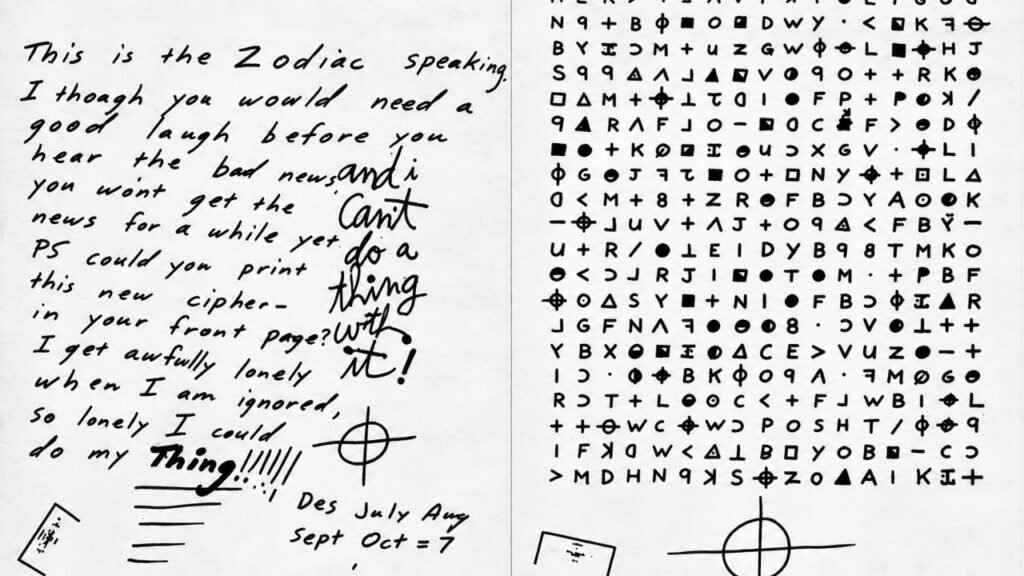
The case has generated decades of amateur sleuthing. In December 2020, a team of independent codebreakers solved the “340 cipher,” a coded message that had gone unsolved for more than 50 years. The decoded text didn’t reveal an identity. Despite numerous suspects and theories, no suspect has ever been officially proven.
Why he ranks tenth: The Zodiac is the usual American answer to “most wanted person in history” among unidentified offenders. Even without a name, he shaped popular culture, film and the true-crime genre.
Bonus: The Newest Major US Case, Rex Heuermann and the Gilgo Beach Murders
Though not yet part of the traditional top ten, the most significant US serial killer news of 2026 deserves mention.
For over a decade, the remains of multiple women found along Ocean Parkway on Long Island, New York, went unsolved. Investigators arrested architect Rex Heuermann in 2023. On April 8, 2026, he changed his plea to guilty and admitted to killing eight women over 17 years, targeting sex workers. His trial had been set for September. Prosecutors said police tracked multiple burner phones and matched DNA from discarded pizza crusts to the murders.
On June 17, 2026, he was sentenced to life in prison without the possibility of parole. As part of the plea, he agreed to cooperate with the FBI’s behavioral analysis unit to help catch other serial killers.
The case follows a familiar pattern: marginalized victims, a long delay, and a resolution through modern forensic techniques.
More Famous Killers: Honorable Mentions
These offenders narrowly missed the top ten but still appear on nearly every list of serial killers.
- Charles Cullen: A nurse who confessed to killing patients in New Jersey and Pennsylvania hospitals. He was sentenced to multiple consecutive life terms in 2006, and investigators believe the true number of victims may be higher.
- Dorothea Puente: A Sacramento boarding-house owner who killed tenants and kept collecting their benefit checks. She received a life sentence and died in 2011.
- Nannie Doss: Known as the “Giggling Grandma,” she poisoned several husbands and relatives in the mid-20th century.
- Belle Gunness: An Indiana farm owner in the early 1900s who lured men and killed them for money. Her fate after a 1908 fire remains uncertain.
- Kristen Gilbert: A VA nurse convicted of killing patients with medication in Massachusetts in the 1990s.
Female Serial Killers in the US: What Makes Them Different?
Women make up only a small share of known serial offenders, generally estimated at around one in ten. Research has found consistent differences between female serial killers and their male counterparts:
- Victims: Female offenders more often kill people they know, such as spouses, relatives, patients or tenants.
- Method: Poison and medication are more common than firearms or physical violence, which makes some cases hard to detect.
- Motive: Financial gain and a caretaking role are recurring themes.
The healthcare setting deserves separate mention. Nurses and other caregivers, both male and female, have committed some of the hardest-to-detect serial killings, because deaths in medical settings often look natural.
Serial Killers Who Were Never Caught: Unsolved US Cases
Alongside the Zodiac, several other American cases remain unsolved. These are the best-known serial killers who were never caught:
| Case | Period | Location | Details |
| Servant Girl Annihilator | 1884–1885 | Austin, Texas | Often described as the first American serial-killer case |
| Axeman of New Orleans | 1918–1919 | Louisiana | Attacks on Italian-American families |
| Cleveland Torso Murderer | 1934–1938 | Ohio | At least a dozen victims |
| Freeway Phantom | 1971–1972 | Washington, D.C. | Six girls and young women |
“Unsolved” doesn’t always mean “unsolvable.” The Golden State Killer went undetected for more than 40 years, and Gilgo Beach took around 13 years from the discovery of the remains to an arrest. New DNA methods keep changing the odds.
How Many Serial Killers in the US? The Latest Statistics
The database numbers
The Radford/FGCU Serial Killer Database is believed to be the most comprehensive of its kind. As of March 1, 2023, it held information on 5,752 serial killers worldwide, of whom 64% (3,690) were from the United States. The US accounts for about two-thirds of documented cases globally, though the Radford team cautions that country totals reflect how many killers were caught and reported, not only how many exist.
How Many Serial Killers Are Active in the US?
Nobody knows exactly. A widely cited FBI estimate is 25 to 50 at any given time. Radford data put the number at 30 by 2015, and Professor Mike Aamodt estimated an average of 54 per year from 2010 to 2015. By contrast, Murder Accountability Project founder Thomas Hargrove has argued the true number could be closer to 2,000, though critics contest that figure and it likely includes offenders whose crimes investigators haven’t linked.
Are There Any Active Serial Killers?
Almost certainly, yes, but far fewer than during the 1980s peak. The number of active serial killers in the US peaked in the 1980s, and 1987 was the year with the most active known offenders. There was an average of 162 active per year in the 1980s under the two-or-more-victims definition, versus about 48 per year in the 2010s. Experts point to DNA databases, cell-phone data, surveillance cameras and better information-sharing between agencies as factors that make it harder to stay hidden.
What State Has the Most Serial Killers?
By total victims, California leads. The Radford/FGCU 2016 snapshot listed California with 1,628 victims, Texas with 893, Florida with 845, Illinois with 629 and New York with 628. Later compilations show higher totals as researchers update the data, with one ranking that many sites have republished listing California at 1,777, Texas at 984 and Florida at 933.
Adjusted for population, the picture changes. The 2023 Radford/FGCU report found the highest ratios in Nevada (214%), Florida (184%) and Washington (168%), meaning those states had more serial-killer victims than their population alone would predict.
Why Do Serial Killers Kill?
There’s no single answer. The FBI’s 2005 symposium on serial murder emphasized that offenders are a diverse group, with motives ranging across:
- Anger or revenge
- Financial gain
- Power and control
- Sexual gratification
- Thrill-seeking
- Ideology
- Psychosis (a small minority)
Most serial killers are not legally insanee. They understand that their acts are illegal, plan to avoid detection, and often function in ordinary jobs and families, as Bundy, Gacy and Rader did. Studies of convicted offenders often find higher rates of childhood abuse, early behavioral problems and psychopathiccsni traits, but researchers observe those as correlations in offenders, and they don’t reliably predict who will offend. Most people who experience childhood trauma never harm anyone.
One factor stands out across the cases in this article: victim availability. Many offenders targeted people whom society was slower to search for, including sex workers, runaways and people in poverty. Improving how missing-persons cases are handled is widely considered among the most effective preventive measures.
Most Wanted Person in History: Is There an Answer?
There’s no official ranking of the most wanted person in history. If the question is about the most famous unidentified offender in America, most people name the Zodiac. If you mean the FBI’s list, the bureau launched its Ten Most Wanted Fugitives list in 1950, and it has included many violent offenders. The FBI added Ted Bundy in 1978. Because “most wanted” is subjective, any single answer is a matter of framing rather than fact.
What These Cases Teach Us
The names on this top serial killers list are memorable, but the lasting lessons come from how investigators caught them. Bundy’s case pushed agencies to cooperate across state lines, Dahmer’s raised questions about police accountability, Ridgway’s turned on DNA evidence, Rader’s on digital forensics, and DeAngelo’s on genetic genealogy. The newest case, Rex Heuermann in 2026, shows that investigators can still solve cases that many once considered unsolvable.
Serial murder is rare, and the long-term trend is downward. Behind every entry above are victims whose lives mattered, and many of them were overlooked when they went missing.
Frequently Asked Questions
Ted Bundy, John Wayne Gacy, Jeffrey Dahmer, Gary Ridgway, Dennis Rader, Richard Ramirez, Joseph DeAngelo, Aileen Wuornos and the unidentified Zodiac Killer are the names that appear most often.
Samuel Little, whom the FBI described as the most prolific convicted serial killer in US history, confessed to 93 murders.
Estimates of confirmed active offenders range from about 25 to 55 at any time. Estimates of undetected offenders run far higher, up to roughly 2,000, but that number is disputed.
The Radford/FGCU database lists 3,690 US serial killers as of March 2023.
California, by total numbers. Nevada, Florida and Washington show the highest rates relative to population.
Almost certainly, but far fewer than during the 1980s peak. An offender only becomes “known” once caught or linked to crimes, so the exact number can’t be determined.
Aileen Wuornos is the best known. Others include Dorothea Puente, Nannie Doss, Belle Gunness and Kristen Gilbert.
The Zodiac Killer, the Axeman of New Orleans, the Servant Girl Annihilator, the Cleveland Torso Murderer and the Freeway Phantom.
Motives include anger, money, power, sexual gratification, thrill and, rarely, psychosis. No single profile predicts who becomes a serial killer.
Source: Britannica | FBI