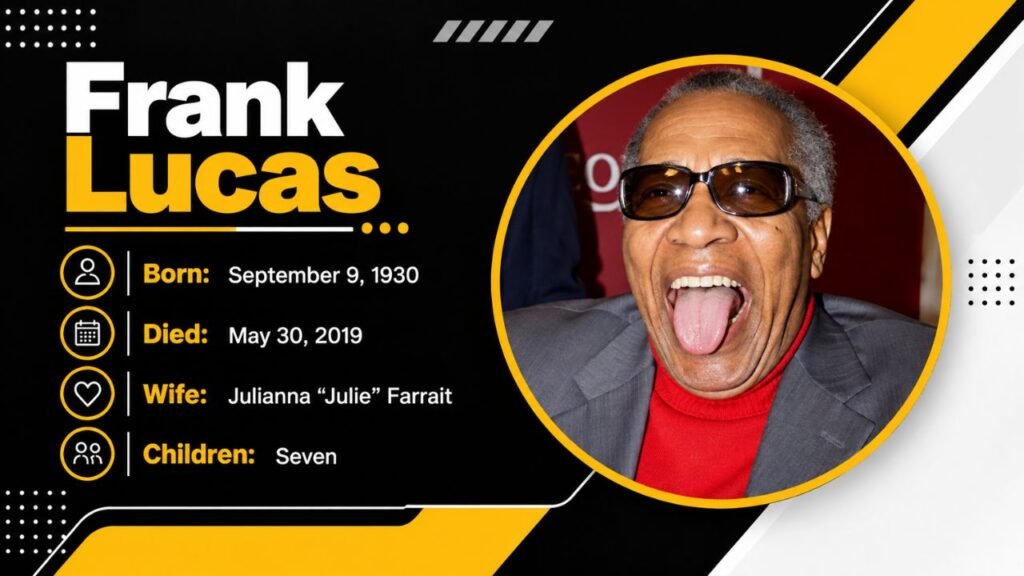
Few figures from 1970s New York crime history have stayed in the public imagination the way Frank Lucas has. Born in rural La Grange, North Carolina, in 1930, Frank Lucas became the Harlem heroin dealer who claimed to be making a million dollars a day, who allegedly cut the Mafia out of the supply chain, and who was later played by Denzel Washington in Ridley Scott’s 2007 film. He died on May 30, 2019, at the age of 88, of natural causes, according to his nephew. Nearly seven years later, his name still shows up in search bars, streaming queues, and true-crime playlists.
The story took decades to play out, moving from a poor Southern childhood through Harlem’s street economy, a Southeast Asian supply line, a 1975 raid in New Jersey, a 70-year sentence that was cut short by cooperation, and a long, quiet old age. Along the way it pulled in two more names that keep getting attached to his: Ellsworth “Bumpy” Johnson, the Harlem racketeer he said mentored him, and Richie Roberts, the detective who helped bring him down and later became his lawyer.
Frank Lucas Snapshot
| Detail | Information |
| Full name | Frank Lucas |
| Born | September 9, 1930, La Grange, North Carolina |
| Died | May 30, 2019, New Jersey, age 88 |
| Cause of death | Natural causes, per his nephew |
| Known as | Harlem heroin kingpin, “Superfly,” the “Original Gangster” |
| Signature product | “Blue Magic” heroin |
| Claimed peak earnings | About $1 million per day (his own claim) |
| Mentor (per Lucas) | Ellsworth “Bumpy” Johnson |
| Raid and arrest | January 1975, Teaneck, New Jersey |
| Original sentence | 70 years in prison |
| Time served on that sentence | Roughly five years, after cooperating |
| Wife | Julianna “Julie” Farrait, married 1967 |
| Children | Seven |
| Film portrayal | Denzel Washington, American Gangster (2007) |
Who Was Frank Lucas?
Anyone asking who was Frank Lucas is really asking two questions at once: who the man actually was, and who the movie made him out to be. The documented version is that Lucas was a drug trafficker who rose to the top of Harlem’s heroin trade in the late 1960s and early 1970s. His defining move, according to investigators and his own accounts, was to skip the Italian Mafia middlemen and buy directly from suppliers in Southeast Asia’s Golden Triangle. That let him sell a purer product for less than the competition.
The court record is fairly consistent on the broad outline. What’s far less consistent is everything Lucas said about himself. He was a gifted storyteller, and several of the claims that made him famous – the million dollars a day, the coffins, the decade at Bumpy Johnson’s side – come mostly from his own mouth and have been questioned by people who were there.
A note on “who is Frank Lucas” searches: the present tense in that phrase trips up a lot of readers. There is no current Frank Lucas to profile. The man died in 2019, and most of what turns up under that search is a mix of the film, the magazine reporting that inspired it, and decades of retelling.
Frank Lucas Early Life: From La Grange to Harlem
Lucas grew up poor in eastern North Carolina during the Jim Crow era. In later interviews he described a childhood shaped by hard work and by an act of racial violence against a relative that he said changed how he saw the world. Those details rest almost entirely on his own recollections, and like much of his biography they haven’t been independently confirmed.
What isn’t in dispute is the move north. Lucas left North Carolina for New York as a teenager and landed in Harlem, where he drifted from odd jobs into street crime. Harlem’s street economy had its own rules, and a young man with nerve could get noticed there. Lucas did.
Bumpy Johnson and Frank Lucas: The Mentor Question
Almost every account of Lucas’s rise runs through Ellsworth “Bumpy” Johnson, the Harlem racketeer who ran numbers and gambling operations for decades. According to Lucas, he spent roughly a decade as Johnson’s driver, bodyguard, and right-hand man, and that’s where he learned how power worked on the street. Johnson died in July 1968. Lucas would later say he picked up the pieces of that world and built something larger on top of it.
The relationship between Bumpy Johnson and Frank Lucas is one of the most repeated parts of the legend, and one of the least settled. Lucas was the primary source for it, and it’s the version audiences saw dramatized on screen. Some historians and people familiar with the era have questioned how close the two men really were and how much of the “protégé” narrative was polished over the years. Nobody seriously doubts that Lucas came up in Johnson’s shadow to some degree. The disagreement is over how central Johnson actually was to Lucas’s rise.
A note on “bumpy johnson frank lucas” searches: the phrase appears in both orders, and searchers typing bumpy johnson frank lucas or frank lucas bumpy johnson are usually trying to settle the same question – whether the mentorship was real. Whether the query reads frank lucas bumpy johnson or bumpy johnson frank lucas, the underlying issue is the same. The short answer is that it’s real but embellished. Johnson gave Lucas a template and some street credibility. The international supply chain and the branded product that followed were Lucas’s own doing.
The Golden Triangle Supply Line
In the late 1960s, Lucas traveled to Southeast Asia and, by his own account, arranged to buy heroin directly at the source in the Golden Triangle, the mountainous border region where Thailand, Laos, and Myanmar meet. Cutting out the middleman was the whole point. It let him undercut other suppliers while keeping enormous margins.
Then comes the detail that made the story famous. Lucas claimed he smuggled the heroin into the United States inside the coffins of American servicemen killed in Vietnam. It’s the centerpiece of the film, and it’s also the claim most often challenged. Leslie “Ike” Atkinson, the associate who worked with Lucas on the Southeast Asian side of the operation, has denied that the coffin story happened. Other accounts point to cargo shipments and military transport instead.
The safe reading is that the Golden Triangle connection is well established, while the coffins are best treated as alleged background rather than settled fact.
Blue Magic and the Frank Lucas Coat
By the early 1970s, Lucas was reportedly selling a heroin branded “Blue Magic” that was more potent than much of what was available on the street. The name spread, the reputation spread, and his operation, which by many accounts drew in several brothers and relatives from North Carolina, grew into a family business.
He also dressed the part, and that leads to one of the most searched images tied to him. The Frank Lucas coat has become a piece of pop-culture shorthand. In March 1971, Lucas attended the Muhammad Ali vs. Joe Frazier “Fight of the Century” at Madison Square Garden in a chinchilla coat and matching hat, a moment the film recreates. In the movie version, a detective notices that Lucas has better seats than the Italian mobsters and starts asking questions. Whether real life unfolded that neatly is a separate matter, but the Frank Lucas coat became a symbol of how loud his success had grown.
Frank Lucas Arrested: The 1975 Raid
Empires like this rarely end quietly, and Lucas’s didn’t. In January 1975, authorities raided his home in Teaneck, New Jersey. According to reports, they found about $584,000 in cash in the house, along with keys to safe deposit boxes in the Cayman Islands.
The investigation was led by Newark detective Richie Roberts, whom the film turns into a character played by Russell Crowe. That character is a composite, but the real Roberts is a real person, and his relationship with Lucas afterward is one of the stranger footnotes in the case. Roberts, who helped bring Lucas down, later became a lawyer and represented him. He also became godfather to one of Lucas’s sons.
Lucas was convicted on federal and state drug charges and sentenced to 70 years in prison.
Quick timeline of the arrest phase:
- Late 1960s – Lucas establishes a direct heroin supply from Southeast Asia
- March 1971 – Lucas attends the Ali-Frazier fight in his chinchilla coat
- January 1975 – Authorities raid his Teaneck home and find $584,000 in cash
- 1976 – Lucas is convicted and sentenced to 70 years in prison
- 1981 – Sentences reduced to time served plus lifetime parole after cooperation
What Happened to Frank Lucas After the Conviction?
People asking what happened to Frank Lucas usually expect a single answer, but the record has several parts.
Lucas did not serve anywhere near 70 years. He became an informant, and by most accounts his cooperation helped authorities take down dozens of other traffickers and corrupt law enforcement officials. He and his family were reportedly placed in the Witness Protection Program. In 1981, his federal and state sentences were reduced to time served plus lifetime parole, which meant he served roughly five years on the original conviction.
That wasn’t the end of his legal trouble. Lucas was arrested again in the early 1980s on a drug charge tied to a parole violation, and a 1984 conviction carried a seven-year sentence. Sources differ on exactly how much of that term he served.
The broader answer to what happened to Frank Lucas is that he was caught, cooperated, got a second chance, ran into the law again, and eventually settled into a much quieter life than the one he built in Harlem.
What Did Frank Lucas Do After Prison?
The question of what did Frank Lucas do after prison has a less dramatic answer than the movie’s ending suggests. He lived mostly in New Jersey, stayed close to family, and gradually became something of a reluctant celebrity. Gave interviews, appeared in documentaries, and worked with journalist Mark Jacobson, whose 2000 New York magazine feature “The Return of Superfly” brought Lucas back into public view and eventually became the foundation for the film.
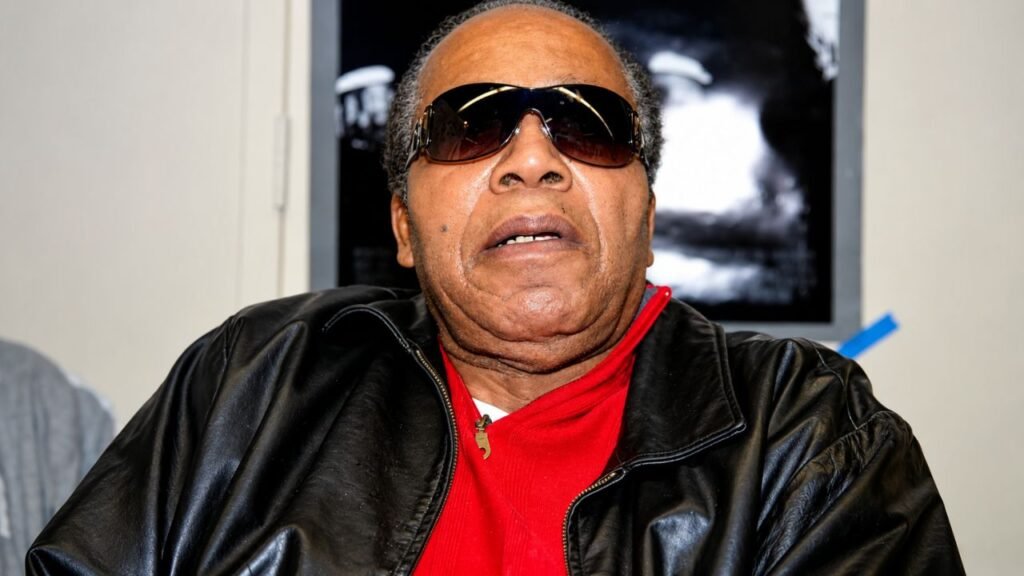
He wasn’t entirely out of trouble, either. At age 81, Lucas was sentenced to five years of probation in a New Jersey state case after pleading guilty to taking a $17,000 federal assistance check, cashing it, and then claiming it was lost and cashing a replacement. He appeared at sentencing in a wheelchair, and reports at the time said he was dealing with arthritis and diabetes. For a man once described as moving millions, it was an unglamorous footnote.
Frank Lucas Wife: Julie Farrait and the Eva Confusion
The real Frank Lucas wife was Julianna Farrait, usually called Julie, whom he married in 1967. She was of Puerto Rican background. The film changes the name and gives the character to a beauty queen called Eva, played by Lymari Nadal.
A note on “frank lucas wife eva” searches: this is one of the more common variations tied to the story, but it’s a bit misleading. The Frank Lucas wife Eva people search for is the movie character, not the real woman. The film’s version is glamorous, loyal, and mostly a bystander to the business, while the real Julie’s legal history shows she was tied to the drug trade herself. Anyone comparing the Frank Lucas wife Eva of the screen with Julie in real life should treat the film version as dramatization rather than biography.
The court record on Julie is fairly specific. She was convicted on drug-related charges and spent years in prison in the 1970s. In 2010, she received another five-year sentence after being caught trying to sell cocaine in Puerto Rico. Since Lucas’s death, she has largely stayed out of the media, and no widely reported updates on her have surfaced.
Frank Lucas Jr. and the Family He Left Behind
Lucas was survived by seven children. Frank Lucas Jr. is among the relatives who draws public interest, mostly because the name invites the question of whether the son followed the father. In general, the children have kept their lives private, and reliable public information about Frank Lucas Jr. is thin compared with what exists about his father.
That’s worth stating plainly, because several people share similar names and unverified claims circulate online. Anyone researching Frank Lucas Jr. should stick to interviews given by the family itself, not tabloid summaries, and should treat confident claims about Frank Lucas Jr, especially ones with no named source, with caution. His nephew, Aldwan Lassiter, was the family member who confirmed Lucas’s death to the press.
How Did Frank Lucas Die?
Anyone asking how did Frank Lucas die will find a plain answer in the reporting. He died of natural causes on May 30, 2019, in New Jersey, at the age of 88. His nephew, Aldwan Lassiter, confirmed the news to Rolling Stone. Lucas had reportedly been in declining health, and in his final years he used a wheelchair following a car accident. Wikipedia lists the place of death as Cedar Grove, while most news reports say only New Jersey.
There is no reported mystery behind how did Frank Lucas die. No foul play has been alleged, and no dramatic final chapter has surfaced. After decades of stories about violence and smuggling, the ending was a quiet one.
A note on “is Frank Lucas still alive” searches: the answer is no. Is Frank Lucas still alive is a common question partly because the film has aged so well and partly because old interview clips keep circulating. Every credible outlet, including The Hollywood Reporter, Rolling Stone, and The Mob Museum, confirmed his death in 2019. When articles say Frank Lucas died, they mean the Harlem drug kingpin, and Frank Lucas died in the New Jersey area, far from the Harlem streets that made him famous.
Frank Lucas Net Worth: Did Frank Lucas Die Poor?
There is no verified, audited figure for Frank Lucas net worth at any point in his life. The number that gets repeated is his own claim of about $1 million a day at the height of his operation, which is a boast rather than an accounting. Many websites list a Frank Lucas net worth in the low millions, but those figures are usually estimates with no source behind them, and a confident Frank Lucas net worth number should be treated with suspicion.
What can be said is that a large share of his wealth was seized or lost after the 1975 raid, and by most accounts he did not live like a rich man in later decades. That brings up the related question of whether Frank Lucas died poor. The most accurate answer is that he did not die wealthy, and no fortune has been reported for his heirs, but he wasn’t reported to be destitute either. Lucas lived in the New Jersey area with family support and some income from the book, interviews, and film-related appearances. Details about his estate haven’t been widely published.
So, did Frank Lucas die poor? Not in the way a movie might frame it, but nowhere near the wealth of his peak years. The gap between the legend and the final chapter is what makes the story compelling.
The Frank Lucas Movie: What American Gangster Got Right and Wrong
The film that made him a household name arrived in 2007. American Gangster, directed by Ridley Scott and written by Steven Zaillian, stars Denzel Washington as Lucas and Russell Crowe as detective Richie Roberts. The cast also includes Chiwetel Ejiofor, Josh Brolin, and Ruby Dee, whose performance as Lucas’s mother earned an Academy Award nomination. The film received two Oscar nominations in total and grossed more than $250 million worldwide.
Anyone searching for the Frank Lucas movie is almost always looking for this one. It’s described as “loosely based” on his life, and that phrase matters. The film compresses events, invents characters, and shifts details for drama. Lucas himself said much of it wasn’t accurate, though he also reportedly enjoyed the attention. Scott has said the real Frank hung around the set and that Washington was respectful toward him. The Frank Lucas movie also traces back to Mark Jacobson’s magazine reporting, later collected in a book also titled American Gangster.
Elements the film handled loosely:
- The coffins – dramatic, but denied by Lucas’s own associate
- The chinchilla coat and the fight – rooted in real events, though the detective’s discovery moment is a screenwriting shortcut
- Richie Roberts – a composite character, while the later friendship between Roberts and Lucas is real
- The ending – real life included a second arrest and later legal trouble
A note on “Frank Lucas American Gangster” searches: readers using that phrase are usually trying to work out how much of the film is true. Roughly speaking, the outline is real and the details are dramatized. The story of Frank Lucas American Gangster fans watch is really two stories, the man and the myth, and separating them takes some effort.
The Other Names in the Story
| Name | Role | Status |
| Frank Lucas | Harlem heroin kingpin | Died May 30, 2019 |
| Ellsworth “Bumpy” Johnson | Harlem racketeer, claimed mentor | Died 1968 |
| Julianna “Julie” Farrait | Lucas’s wife | Married 1967; convicted separately; private since 2019 |
| Richie Roberts | Detective, later Lucas’s lawyer | Inspired the Russell Crowe character |
| Leslie “Ike” Atkinson | Southeast Asian associate | Disputed the coffin claim |
| Mark Jacobson | Journalist | Wrote the magazine piece and book behind the film |
| Aldwan Lassiter | Nephew | Confirmed Lucas’s death |
Frank Lucas Latest Updates
Since Lucas is no longer living, “latest updates” mostly means new ways his story is being told. The most recent project is Pusherman, a documentary directed and narrated by Legs McNeil that examines Lucas’s life through the lens of Black gangster lore. It includes interviews with journalist Mark Jacobson, crime writer Michael Daly, and hip-hop historian Fab 5 Freddy, and it was released on DVD through MVD Entertainment Group.
So who is Frank Lucas in 2026? A man who is gone, but whose story is still being reworked by filmmakers and writers. As of late September 2026, no major new legal or family development in the Frank Lucas story has been widely reported. Relatives have stayed largely private, and American Gangster continues to find new audiences on streaming.
Why the Story Matters Beyond Harlem
Beyond the facts of who sold what and to whom, the Frank Lucas story keeps landing in debates that have little to do with 1970s Harlem. It’s a case study in how a criminal’s own boasting can harden into accepted history, and in how a film can replace the record in the public mind. It also raises an uncomfortable question about how a man who cooperated with prosecutors and served about five years of a 70-year sentence should be remembered.
Frequently Asked Questions
He was a Harlem drug trafficker who rose to prominence in the late 1960s and early 1970s by buying heroin directly from Southeast Asia.
To supporters he was a folk figure who beat the Mafia at its own game. To critics he was a dealer who profited from addiction. Both views are part of the record.
No. He died on May 30, 2019, at age 88.
Of natural causes, according to his nephew, after a period of declining health.
Julianna “Julie” Farrait, whom he married in 1967. The film character named Eva is loosely based on her.
No verified figure exists. Online estimates vary widely and are generally unsourced.
He wasn’t reported to have died wealthy, and most of his fortune was gone long before, but there are no reliable reports that he was destitute.
He lived quietly in New Jersey, gave interviews, worked with journalist Mark Jacobson, and had occasional legal trouble, including a probation sentence at age 81.
Lucas said he worked for Johnson for years, and the connection is widely repeated, though how deep it went is debated.
Source: WikiPedia