Few names in British criminal history carry the weight of Ian Brady and Myra Hindley. Between July 1963 and October 1965, the couple abducted and murdered five children and teenagers around Manchester. Most of the victims were buried on Saddleworth Moor in the Pennine hills, which is why the case became known as the Moors murders.
More than sixty years later, the case is still not closed. Four victims have been found and returned to their families. The fifth, 12-year-old Keith Bennett, has never been recovered. That is why the story keeps returning to the headlines, and why police and relatives still ask for any credible information.
This guide covers the whole case from start to finish: who the two killers were, how they met, the five victims, how they were caught, the 1966 trial, their decades in custody, their deaths, a full timeline, and the latest update on the search for Keith. It is written with care for the victims and their families, who are the real centre of this story.
Last updated: 3 October 2026.
Quick Facts
| Detail | Ian Brady | Myra Hindley |
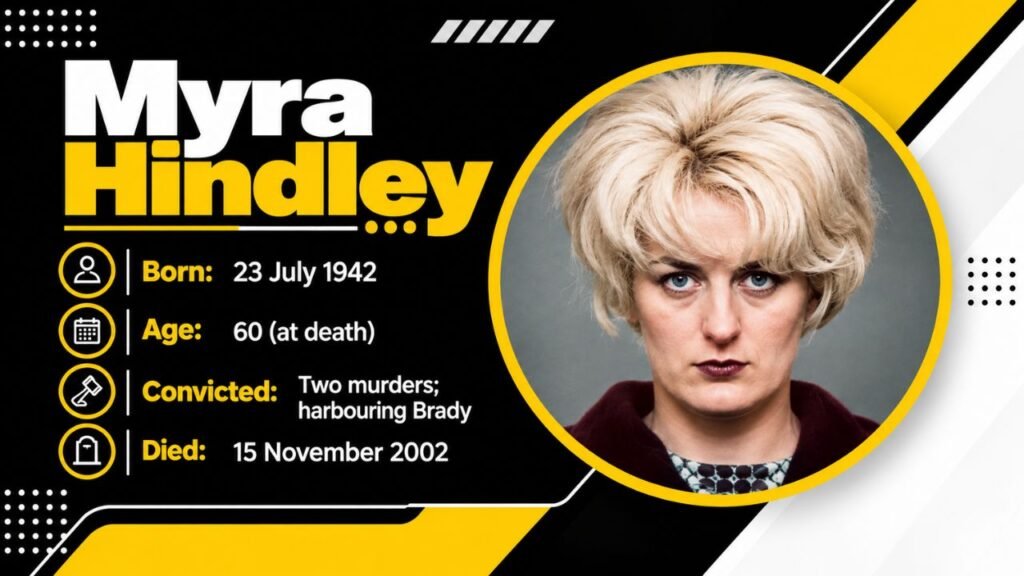
| Born | 2 January 1938, Glasgow | 23 July 1942, Gorton, Manchester |
| Job in the early 1960s | Stock clerk, Millwards (chemical wholesaler) | Typist, Millwards |
| Arrested | 7 October 1965 | 11 October 1965 |
| Convicted | 6 May 1966, three murders | 6 May 1966, two murders and harbouring Brady |
| Sentence | Life imprisonment | Life imprisonment |
| Later admissions | 1985–87: Pauline Reade and Keith Bennett | 1986–87: Pauline Reade and Keith Bennett |
| Died | 15 May 2017, Ashworth Hospital, aged 79 | 15 November 2002, Suffolk, aged 60 |
| Released? | Never | Never |
Who Was Ian Brady?
Ian Brady was born Ian Duncan Stewart in Glasgow in 1938. His mother was a single parent who struggled to cope, and he was largely raised by foster parents in the Gorbals district. He was intelligent but difficult, and by his teens he was getting into trouble for petty theft and burglary. He was sent to a borstal, a detention centre for young offenders.
After his release he moved to Manchester, where he lived with his mother and stepfather and took his stepfather’s surname, Brady. He found work at Millwards, a chemical wholesaler, and held down a steady job as a stock clerk. Colleagues remembered him as moody, private and prone to long silences.
Away from work, he was reading the Marquis de Sade and books about Nazism, and he developed a cold, contemptuous view of other people. He later had a reputation for believing that rules did not apply to him. After his conviction he was diagnosed with a personality disorder and was eventually moved from prison to a secure psychiatric hospital.
Who Was Myra Hindley?
Myra Hindley grew up in Gorton, in a tough working-class household. Her father was a former paratrooper who could be violent, and she spent a lot of time with her grandmother. At school she was seen as average, but she was sporty and had a reputation for toughness.
An important moment in her teenage years came in 1961, when her close friend Michael Higgins, aged 13, drowned. Hindley was devastated, and she said afterwards that it changed her. Not long after, she took a job at Millwards, where she met Brady.
How Did Ian Brady and Myra Hindley Meet?
Hindley started at Millwards in January 1961. She became infatuated with Brady almost immediately and wrote about him obsessively in her diary. He ignored her for months before finally inviting her to the cinema.
The relationship quickly became the centre of her life. She dyed her hair blonde, adopted his reading list and took on his views. Within a few years they were living in her grandmother’s house in Gorton, and later in a council house in Hattersley, on the edge of Greater Manchester.
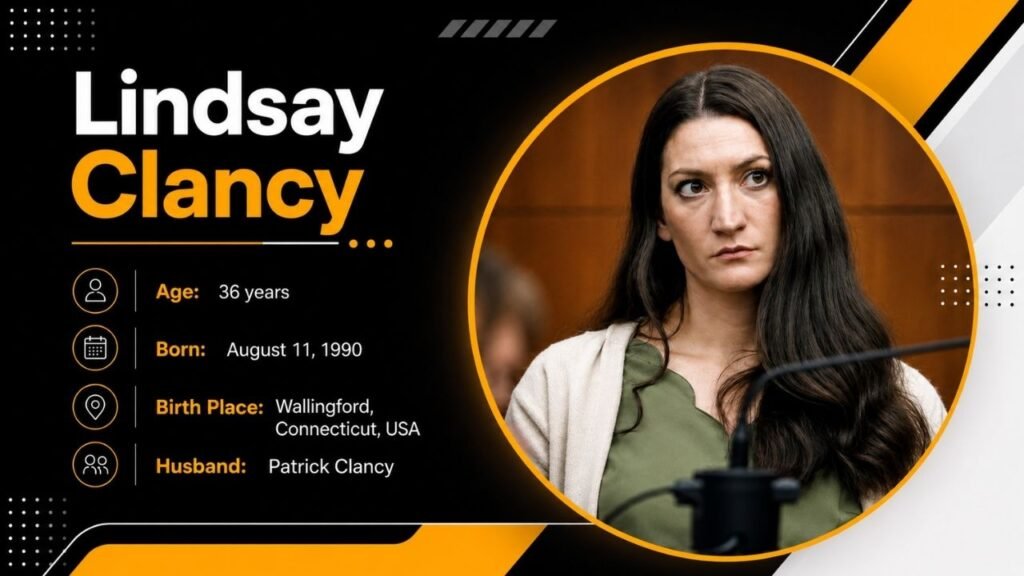
How much each of them drove the crimes has been argued over ever since. Brady tended to cast himself as the leader and Hindley as a follower. Hindley later said she had been under his influence and had acted out of fear and devotion. Many people, particularly the victims’ families, never accepted that she was merely a bystander. She was present for the abductions and, in some cases, she was the one who approached the victims, because a young woman made a child feel less afraid.
The Five Victims
| Victim | Age | Date taken | Where found |
| Pauline Reade | 16 | 12 July 1963 | Saddleworth Moor, 1987 |
| John Kilbride | 12 | 23 November 1963 | Saddleworth Moor, October 1965 |
| Keith Bennett | 12 | 16 June 1964 | Never found |
| Lesley Ann Downey | 10 | 26 December 1964 | Saddleworth Moor, October 1965 |
| Edward Evans | 17 | 6 October 1965 | Killed at the couple’s home; found by police |
Pauline Reade (1963)
Pauline Reade was 16 when she disappeared on her way to a dance at a railway social club in July 1963. She was the couple’s first victim, but her disappearance was not linked to them for more than twenty years. Her body was found on Saddleworth Moor in July 1987, after Hindley and Brady had finally admitted what they had done.
John Kilbride (1963)
John Kilbride was 12 when he went missing from a market in Ashton-under-Lyne in November 1963. His body was found on the moor in October 1965, in the days after the couple’s arrest. Brady was convicted of his murder, and Hindley of harbouring him.
Keith Bennett (1964)
Keith Bennett was 12 when he left home on 16 June 1964 to visit his grandmother. He was last seen on the street in Longsight, Manchester. He is the only victim whose remains have never been found, and his case is the reason the search on the moor has never entirely ended.
Lesley Ann Downey (1964)
Lesley Ann Downey was 10 when she was taken from a fairground in Ancoats on Boxing Day 1964. The couple made a tape recording of her final hours. When it was played at their trial, many in the courtroom found it almost unbearable. It became some of the most damning evidence in the case.
Edward Evans (1965)
Edward Evans was 17 when he was killed at the couple’s home in Hattersley on 6 October 1965. It was the killing that brought the whole story to light, because a witness was present.
How Were They Caught?
By autumn 1965, Brady had been drawing in Hindley’s 17-year-old brother-in-law, David Smith, partly to impress him with his own brutality. On the evening of 6 October, Brady invited Smith to the house. What Smith saw that night horrified him.
Smith kept his composure, helped clean up so as not to alarm the couple, and left in the early hours. He then went to a phone box and called the police. Officers went to the house on 7 October and found Evans’s body. Brady was arrested at once. Hindley was arrested on 11 October.
The wider case unravelled quickly from there:
- Police found a left-luggage ticket hidden in a prayer book belonging to Hindley.
- It led them to two suitcases stored at Manchester Central Station.
- The cases contained photographs and the tape recording relating to Lesley Ann Downey.
- Photographs of Hindley posing on the moor helped police work out where to look.
- On 16 October 1965, officers found the body of Lesley Ann Downey. John Kilbride’s body was found days later.
David Smith’s decision to come forward is widely seen as the thing that ended the killings. Without it, there may have been more victims.
The 1966 Trial
The trial opened at Chester Assizes in April 1966. Capital punishment had been abolished in 1965, so the maximum sentence was life imprisonment.
Key points from the trial:
- Brady pleaded not guilty. He tried to play down his own role in some of the killings and to portray Hindley as a willing participant.
- Hindley also pleaded not guilty and tried to portray herself as a woman who had been coerced.
- The jury heard the Lesley Ann Downey tape, saw the photographs and listened to David Smith’s evidence.
On 6 May 1966, the jury returned its verdicts:
| Verdict | |
| Ian Brady | Guilty of the murders of Lesley Ann Downey, Edward Evans and John Kilbride |
| Myra Hindley | Guilty of the murders of Lesley Ann Downey and Edward Evans, and of harbouring Brady after the murder of John Kilbride |
Both received life sentences. At that point, police had not yet connected them to Pauline Reade or Keith Bennett.
Myra Hindley in Prison
Hindley’s time in custody was dominated by one question: would she ever be freed?
Conversion to Catholicism. In the early 1970s, Hindley became a Catholic. Supporters believed it was a sign of genuine remorse. Critics suspected it was strategy.
A failed escape plot. In 1973, Hindley took part in a plot with a prison officer, Patricia Cairns, to escape from Holloway Prison. It failed and Cairns was jailed. The attempt did lasting damage to Hindley’s claim that she was a reformed woman.
Lord Longford’s campaign. The Labour peer and committed Christian Lord Longford campaigned for years for Hindley’s release. He was criticised heavily for it, though he insisted his motives were about forgiveness and the principle that nobody should be beyond redemption.
The tariff question. Hindley’s minimum term was first set at 25 years, was later raised to 30, and was finally set at a whole-life term in 1990, which was confirmed in the following years. Her legal challenges failed, including at the House of Lords in 2000.
Her 1980s admissions. In 1986, Hindley admitted her involvement in the murders of Pauline Reade and Keith Bennett, and she was taken to the moor to help find the graves. Critics argued the confession came with an eye on her parole prospects. Families, meanwhile, were left to reconcile a late admission with 20 years of silence.
Hindley spent 36 years in custody. She never gained release.
Ian Brady in Prison and Ashworth Hospital
Brady’s path was quite different. He never seriously campaigned for release, and he often said he wanted to die in custody.
- In 1985, he was moved from prison to Ashworth, a high-security psychiatric hospital on Merseyside, after being assessed as having a severe personality disorder.
- From the late 1990s he went on a long-term hunger strike. He was kept alive by force-feeding through a tube, which raised legal and ethical debate for years.
- In 2001 he published a book, The Gates of Janus, which claimed to analyse serial killers. It was widely condemned.
- In 2013, a mental health tribunal ruled that he should remain in hospital rather than be transferred to a prison, which he had been requesting.
Brady spent more than 50 years in custody. He never gave police any information about Keith Bennett’s burial site that could be verified.
The 1985–87 Admissions: Pauline Reade and Keith Bennett
For twenty years, the pair stood convicted of only three murders. That changed in the mid-1980s, when Keith Bennett’s mother, Winnie Johnson, and Pauline Reade’s family, along with investigative reporters and the police, pushed to have the case re-examined.
In 1985, Brady admitted to detectives that he had killed two more children. Hindley followed in 1986. Both were taken to the moor, Hindley in 1986 and Brady in July 1987, to try to identify the burial sites.
The searches had one clear result. Pauline Reade’s body was found in July 1987. Keith’s was not. The moor is a vast, featureless landscape, and the terrain had changed over more than two decades. Neither of the two killers gave a location that could be confirmed on the ground.
Latest Updates: The Search for Keith Bennett
The search for Keith has never entirely stopped. Here are the key developments.
Winnie Johnson’s campaign. Keith’s mother spent almost 50 years trying to find her son. She appealed publicly, and in 2010 launched a trust to fund further searches. She died in August 2012, without being able to bury him. Her family, including Keith’s brother Alan Bennett, has continued to speak about the case.
Police position after Brady’s death. After Brady died in 2017, Greater Manchester Police (GMP) said it would never close the investigation. They said they were not actively searching the moor at that time, but that they received information regularly and would continue to act on credible leads.
The 2022 search. In 2022, a Birkenhead author researching a book on Keith’s murder, Russell Edwards, told police he had found what he believed might be human remains on the moor, including a skull. Greater Manchester Police treated the information as credible and began a search, which ran from 30 September to 7 October.
The result. Forensic archaeologists and anthropologists examined the site, and samples were analysed. GMP then announced that there was no evidence of human remains at or around the location. The Chief Constable, Stephen Watson, defended the decision to act on the tip-off, saying the force would not dismiss information that appeared credible. He later described the search as an unwelcome distraction, because the claim turned out to have no validity.
Where things stand. As of 3 October 2026, I could find no confirmed report that Keith’s body has been found. Police have repeatedly asked members of the public to report any information to them in the first instance, because much of Saddleworth Moor is private land. For the very latest, check Greater Manchester Police’s official channels or a current news report.
How and When Did the Two Killers Die?
Myra Hindley died on 15 November 2002, aged 60, in a hospital in Suffolk. She had been in poor health for some time and had bronchial pneumonia. She was 36 years into her sentence.
Ian Brady died on 15 May 2017, aged 79, at Ashworth Hospital. He had been ill with a respiratory condition. His death meant that one of the only two people who knew where Keith Bennett was buried had gone.
Neither ever won release. For many of the victims’ relatives, the fact that they died without disclosing the last grave was another grief.
Full Timeline
| Date | Event |
| 2 January 1938 | Ian Brady is born in Glasgow |
| 23 July 1942 | Myra Hindley is born in Manchester |
| January 1961 | Hindley starts at Millwards, where Brady already works |
| 12 July 1963 | Pauline Reade, 16, is abducted and killed |
| 23 November 1963 | John Kilbride, 12, is abducted and killed |
| 16 June 1964 | Keith Bennett, 12, disappears |
| 26 December 1964 | Lesley Ann Downey, 10, is abducted and killed |
| 6 October 1965 | Edward Evans, 17, is killed in Hattersley; David Smith witnesses it |
| 7 October 1965 | Smith contacts the police; Brady is arrested |
| 11 October 1965 | Hindley is arrested |
| 16 October 1965 | Lesley Ann Downey’s body is found on the moor |
| October 1965 | John Kilbride’s body is found |
| April 1966 | Trial begins at Chester Assizes |
| 6 May 1966 | Guilty verdicts; both receive life sentences |
| 1973 | Failed escape plot involving Hindley |
| 1985 | Brady is moved to Ashworth Hospital |
| 1985–86 | Brady and Hindley admit the murders of Pauline Reade and Keith Bennett |
| July 1987 | Pauline Reade’s body is found |
| 1990 | Hindley told she will never be released |
| 2000 | House of Lords rejects Hindley’s challenge |
| 15 November 2002 | Hindley dies |
| 2010 | Winnie Johnson launches a trust to search for Keith |
| August 2012 | Winnie Johnson dies |
| 15 May 2017 | Brady dies |
| 30 September – 7 October 2022 | Police search the moor after a tip-off; no evidence of remains found |
Why the Case Still Matters
There are several reasons it remains part of public conversation more than six decades later.
- The victims were children. Most were 16 or younger, and the crimes were planned, not impulsive.
- A woman as perpetrator. Hindley’s role challenged public assumptions about who commits violent crime, and her photograph became one of the most recognisable images in British press history.
- Whole-life sentences. The case became a touchstone in debates about whether politicians or judges should decide how long a prisoner is held.
- The unfinished search. Keith Bennett’s family have never been able to hold a funeral with a grave to visit.
- Media ethics. Books, documentaries and dramas keep appearing. Many relatives have asked that attention stay on the victims, not the killers.
Conclusion
The story of Ian Brady and Myra Hindley is one of the darkest chapters in modern British history. It is a story of five lives cut short, and of families who endured decades of grief. It is also a story of persistent searching, by Winnie Johnson until her death, by her family since, and by police who say they will not stop.
Both killers are now dead, and neither ever gave an answer that could be confirmed about where Keith lies. What remains is the hope that new information will one day allow a proper burial for him.
Read Also: Christa Pike | Frank Lucas | John Dillinger Death
Frequently Asked Questions
A couple from Manchester who murdered five young people between 1963 and 1965, known as the Moors murderers.
Five: Pauline Reade, John Kilbride, Keith Bennett, Lesley Ann Downey and Edward Evans.
Several victims were buried on Saddleworth Moor in the Pennines.
David Smith, Hindley’s brother-in-law, who witnessed the killing of Edward Evans and went to the police.
Brady was convicted of three murders in 1966. Hindley was convicted of two murders and of harbouring Brady after a third.
Yes. In the mid-1980s both admitted involvement in the murders of Pauline Reade and Keith Bennett.
No. She died in custody in 2002.
15 May 2017, at Ashworth Hospital.
Not according to the latest reports. A 2022 search found no evidence of remains.
Police have said they will never close it. Anyone with credible information should contact them.