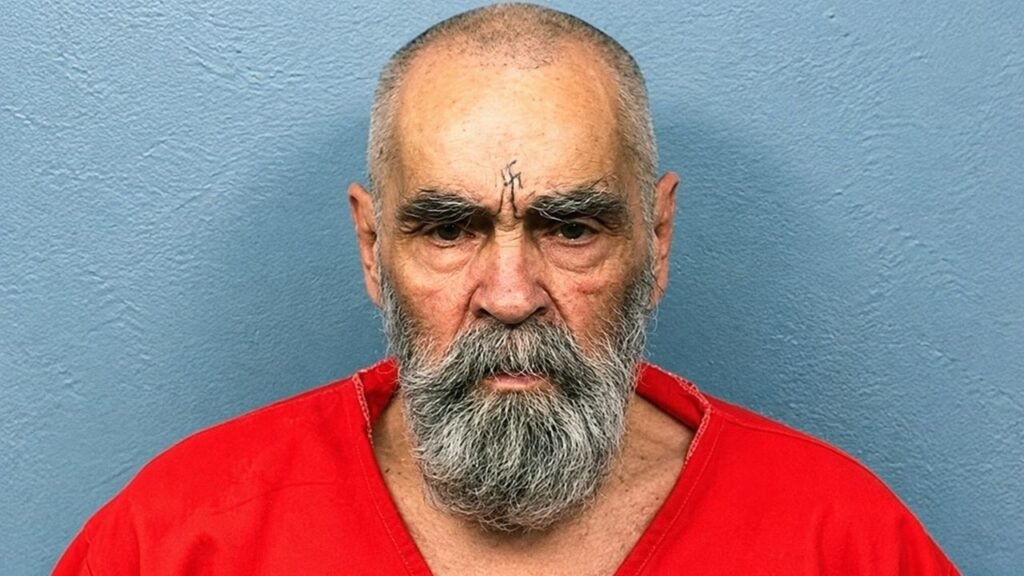
Charles Manson is no longer alive. He died on November 19, 2017, at age 83, while serving a life sentence in California. For more than four decades he was one of the most recognized criminals in America, and he led a small group of followers who committed a series of murders in Los Angeles in August 1969. Those killings, including the murder of actress Sharon Tate, changed the way the country viewed the end of the 1960s.
Manson never personally killed anyone in the Tate and LaBianca murders. Prosecutors argued that he controlled his followers so completely that he was responsible for every killing. A jury agreed, and Manson remained a symbol of violence and cult manipulation for the rest of his life. This article covers his death, his early life, the Manson Family, the crimes, the trial, the people involved and the case’s lasting place in American culture.
Case Snapshot
| Detail | Information |
| Full name at birth | Charles Milles Maddox |
| Date of birth | November 12, 1934 |
| Birthplace | Cincinnati, Ohio |
| Date of death | November 19, 2017 |
| Age at death | 83 |
| Place of death | Mercy Hospital, Bakersfield, Kern County, California, after transfer from Corcoran State Prison |
| Cause of death | Natural causes; autopsy listed acute cardiac arrest from respiratory failure and metastatic colon cancer |
| Time incarcerated | About 46 years for the 1971 murder convictions |
| Parole denials | 12 times between 1978 and 2012 |
| Main convictions | First-degree murder and conspiracy in the Tate and LaBianca killings, January 1971 |
| Sentence | Death, commuted to life in February 1972 |
| Main crimes | Murders in Los Angeles in August 1969, plus later convictions tied to the Gary Hinman and Donald “Shorty” Shea killings |
| Remains dispute | Awarded to his grandson, Jason Freeman, in March 2018; cremated and scattered |
Is Charles Manson Still Alive?
No. Charles Manson died on November 19, 2017, at Mercy Hospital in Bakersfield, California. He had been transferred there from Corcoran State Prison, where he was serving his sentence. The California Department of Corrections and Rehabilitation said he died of natural causes. His official autopsy listed acute cardiac arrest as the immediate cause, resulting from respiratory failure and metastatic colon cancer.
After his death, a four-month legal fight broke out over his body. Pen pals, a man who claimed to be his son and his biological grandson, Jason Freeman, all sought custody of the remains. Freeman is the son of Manson’s son, Charles Manson Jr., who died earlier. In March 2018, a Kern County judge awarded the remains to Freeman. Freeman had Manson cremated and scattered the ashes.
Biography and Early Life, 1934 to 1967
Manson was born Charles Milles Maddox on November 12, 1934, in Cincinnati, Ohio. He later took the surname Manson from an early, brief marriage of his mother’s. His mother, Kathleen Maddox, was a 16-year-old runaway and a heavy drinker. She was imprisoned for armed robbery in 1939, when Charles was four years old. His father, Colonel Walker Henderson Scott Sr., was an itinerant laborer who never married Kathleen and played no role in Manson’s upbringing.
After his mother was imprisoned, Manson moved between relatives in West Virginia and a series of boys’ homes and reform schools. Those included the Gibault School for Boys in Indiana and Boys Town in Nebraska. By his teens he had been arrested repeatedly for burglary, auto theft and armed robbery, and he escaped from several juvenile facilities.
Through the 1950s and 1960s, Manson served federal prison terms at Terminal Island in California and McNeil Island Penitentiary in Washington. His convictions included interstate auto theft, forging stolen U.S. Treasury checks and pandering. While at McNeil Island, he learned guitar from gangster Alvin “Creepy” Karpis. He also studied Scientology auditing techniques, read Dale Carnegie’s How to Win Friends and Influence People and absorbed counterculture mysticism. Manson was paroled in March 1967 at age 32. He had asked prison officials not to release him, because prison had become the only home he knew.
The Manson Family and the Helter Skelter Belief
Manson was released into San Francisco during the 1967 Summer of Love. He moved to the Haight-Ashbury neighborhood and presented himself as a psychedelic gurus and aspiring rock musician. He drew a following of mostly young, disaffected, middle-class women, along with several men, who saw him as a Christ-like figure. At its peak, the group numbered around 100 loose followers.
In 1968 the group moved to Los Angeles and briefly stayed at the home of Beach Boys drummer Dennis Wilson. Wilson introduced Manson to music producer Terry Melcher, the son of actress Doris Day. When Melcher declined to sign Manson to a record deal, Manson became deeply resentful.
Manson became fixated on The Beatles’ 1968 self-titled album, known as The White Album. He read songs such as “Helter Skelter,” “Piggies” and “Blackbird” as coded prophecies, according to lead prosecutor Vincent Bugliosi. Manson told followers that a race war between Black and white Americans was coming. He claimed that after Black Americans won, they would be unable to govern and would turn to Manson and his Family, who would rule from a hidden underground city in Death Valley. When the race war did not start on its own by mid-1969, Manson decided to start it himself. He ordered murders in wealthy white neighborhoods and left messages in blood meant to blame Black militant groups.
The Crimes of 1969
Attacks Before August 1969
On July 1, 1969, Manson shot Bernard “Lotsapoppa” Crowe, a Black drug dealer in Hollywood, after Manson associate Tex Watson had cheated Crowe in a drug deal. Crowe survived. Manson mistakenly believed he had killed a Black Panther, and that belief fed his paranoia.
In late July 1969, Manson sent Bobby Beausoleil, Mary Brunner and Susan Atkins to the Topanga Canyon home of music teacher Gary Hinman to extort money. Hinman was held for two days. Manson himself came to the house and injured Hinman during the ordeal. Beausoleil then killed Hinman. The group wrote “Political piggy” on a wall in Hinman’s blood to mislead police.
The Tate Murders, August 8 and 9, 1969
Manson sent four followers to 10050 Cielo Drive in Benedict Canyon, Los Angeles. Charles “Tex” Watson, Susan Atkins, Patricia Krenwinkel and Linda Kasabian were the group. Kasabian served as the lookout. The house had once been rented by Terry Melcher. At the time of the killings, it was occupied by film director Roman Polanski, who was in London, and his wife, actress Sharon Tate, who was about eight and a half months pregnant.
Watson, Atkins and Krenwinkel cut the phone lines and killed five people. Sharon Tate and her unborn son were among the dead.
Steven Parent, 18, was a recent high school graduate who had been visiting the property’s caretaker. Jay Sebring, 35, was a celebrated Hollywood hairstylist and a close friend of Tate’s. Wojciech Frykowski, 32, was a Polish writer and friend of Polanski. Abigail Folger, 25, was a philanthropist and heiress to the Folger coffee fortune. She was Frykowski’s girlfriend. Sharon Tate, 26, was a rising actress known for Valley of the Dolls, and she was about two weeks from her due date. Atkins later used blood from one of the victims to write the word “PIG” on the front door.
The LaBianca Murders, August 9 and 10, 1969
The following night, Manson went out with Tex Watson, Patricia Krenwinkel, Leslie Van Houten, Linda Kasabian, Steve “Clem” Grogan and Bruce Davis. Manson entered 3301 Waverly Drive in Los Feliz and tied up supermarket executive Leno LaBianca, 44, and his wife Rosemary LaBianca, 38, at gunpoint. He then sent Watson, Krenwinkel and Van Houten inside to kill them. Blood was used to write messages on the walls and refrigerator. Among them were “WAR,” “DEATH TO PIGS,” “RISE” and “HELTER SKELTER,” spelled as “HEALTER SKELTER” in the record.
The Murder of Donald “Shorty” Shea, Late August 1969
Donald “Shorty” Shea, 35, was a stuntman and a hand at Spahn Ranch. Manson suspected him of cooperating with police against the Family. Manson ordered Grogan, Davis and Watson to kill him. Shea’s buried remains were not recovered until 1977.
The People Involved
The Victims
Sharon Tate, 26, and her unborn son, Paul Richard Polanski, were killed two weeks before her due date. Jay Sebring, 35, was a renowned Hollywood hairstylist. Abigail Folger, 25, was a philanthropist and heiress to the Folger coffee fortune. Wojciech Frykowski, 32, was a writer and friend of Roman Polanski. Steven Parent, 18, was a recent high school graduate visiting the caretaker. Leno LaBianca, 44, and Rosemary LaBianca, 38, were a Los Angeles grocery chain executive and a dress shop co-owner. Gary Hinman, 34, was a musician and Ph.D. student. Donald “Shorty” Shea, 35, was a stuntman and Spahn Ranch worker.
Manson Family Members and Their Outcomes
| Name | Role in the crimes | Trial and verdict | Outcome or current status |
| Charles Manson | Cult leader who directed the murders | Convicted in January 1971 of first-degree murder and conspiracy in the Tate and LaBianca killings, and later convicted in the Hinman and Shea cases; death sentence commuted to life in 1972 | Died in prison on November 19, 2017, at age 83 |
| Charles “Tex” Watson | Manson’s right-hand man and the main physical perpetrator at both the Tate and LaBianca scenes | Tried separately after extradition from Texas; convicted in October 1971; death sentence commuted to life | Alive, held at Mule Creek State Prison in California; denied parole more than 18 times |
| Susan Atkins | Took part in the Hinman and Tate murders and wrote “PIG” in blood; later confessed to cellmates | Convicted in January 1971; death sentence commuted to life | Died in prison of brain cancer on September 24, 2009, at age 61 |
| Patricia Krenwinkel | Took part in the killings of Rosemary LaBianca and Abigail Folger and wrote messages in blood | Convicted in January 1971 of seven counts of first-degree murder and conspiracy; death sentence commuted to life | Alive, held at the California Institution for Women; longest-serving female inmate in California |
| Leslie Van Houten | Youngest defendant, 19 at the time; took part in the LaBianca murders | Convicted in January 1971; retried twice before a 1978 conviction for two counts of first-degree murder and conspiracy; sentenced to life | Paroled July 11, 2023, after 53 years in prison; the only Tate-LaBianca killer to be freed |
| Linda Kasabian | Served as lookout and getaway driver at the Tate and LaBianca scenes; did not kill anyone | Received full immunity in exchange for testifying as the prosecution’s main witness | Lived quietly under an assumed name; died in January 2023 at age 73 |
| Bobby Beausoleil | Killed Gary Hinman on Manson’s orders | Convicted of first-degree murder in 1970; death sentence commuted to life | Alive, held at the California Medical Facility in Vacaville |
| Bruce Davis | Involved in the Hinman and Shea murders | Convicted of first-degree murder in 1972; sentenced to life | Alive, held at the California Men’s Colony |
| Steve “Clem” Grogan | Took part in the murder of Donald “Shorty” Shea | Convicted of first-degree murder in 1971; death sentence reduced to life because of diminished capacity | Paroled in 1985 after helping authorities locate Shea’s buried body |
| Lynette “Squeaky” Fromme | Senior loyalist; not charged in the 1969 murders | Convicted in 1975 of attempting to assassinate President Gerald Ford in Sacramento | Paroled in August 2009 after 34 years in federal prison |
| Sandra Good | Close confidante; not charged in the 1969 murders | Convicted in 1976 of conspiracy to mail death threats to corporate executives | Paroled in 1985 after serving 10 years |
Prosecutors, Defense and Judicial Figures
Vincent Bugliosi was a deputy Los Angeles County district attorney. He successfully prosecuted Manson, Atkins, Krenwinkel and Van Houten. He later wrote Helter Skelter, the best-selling true-crime book published in 1974. He died on June 6, 2015.
Judge Charles H. Older of the Los Angeles Superior Court presided over the Tate-LaBianca trial, which lasted about nine months.
Ronald Hughes was the defense attorney assigned to Leslie Van Houten. He disappeared during a camping trip in November 1970, in the middle of the trial. His decomposed body was found months later. His death is widely suspected to have been a retaliatory killing by Manson followers.
Virginia Graham and Ronnie Howard were inmates at the Sybil Brand Institute in Los Angeles. Susan Atkins bragged to them about the Tate murders in November 1969. Their information gave investigators the key lead that broke the case open.
The Tate-LaBianca Trial and Verdicts, 1970 to 1972
The Tate-LaBianca trial began in July 1970 and was one of the longest, costliest and most unusual trials in American legal history.
The courtroom was chaotic. Manson arrived having carved an “X” into his forehead, saying he had “X’d out” of society. His female defendants copied the mark. Manson later changed the scar into a swastika. He disrupted proceedings often, and at one point he leapt over the defense table with a sharpened pencil in an attempt to attack Judge Older. Outside the courthouse, female Family members shaved their heads and held daily vigils. On November 20, 1970, outside the jury’s presence, Manson delivered a rambling monologue blaming society. “The children that come at you with knives are your children,” he said. “You taught them. I didn’t teach them.”
Manson had not physically committed the Tate-LaBianca killings. Bugliosi argued that he held total psychological control over his followers and ordered the murders. On January 25, 1971, the jury found Manson, Atkins, Krenwinkel and Van Houten guilty on all counts. In total, the jury returned 27 guilty verdicts for first-degree murder and conspiracy across the four defendants.
On March 29, 1971, the jury recommended the death penalty for all four defendants. Judge Older formally imposed it on April 19, 1971. In February 1972, the California Supreme Court ruled in People v. Anderson that the state’s death penalty statute was unconstitutional. As a result, the death sentences of Manson, Watson, Atkins, Krenwinkel and Van Houten were automatically changed to life imprisonment with the possibility of parole.
Prison Years, Cult Legacy and Pop Culture Impact
Manson spent 46 years in high-security California prisons, including San Quentin, Folsom, Vacaville, Pelican Bay and Corcoran State Prison. He accumulated more than 100 serious disciplinary violations, including for weapon possession, assaults and contraband. He never expressed remorse. He was denied parole 12 times between 1978 and 2012. In September 1984, another inmate doused Manson with paint thinner and set him on fire at Vacaville. He suffered second- and third-degree burns over 20 percent of his body.
Cultural historians widely regard the August 1969 murders as a symbolic end of the peaceful hippie idealism of the 1960s.
The case has inspired many books, documentaries and films. The most notable include Bugliosi’s Helter Skelter (1974); Tom O’Neill’s CHAOS (2019), which led to a 2025 Netflix documentary; Quentin Tarantino’s Once Upon a Time in Hollywood (2019); and Netflix’s Conversations with a Killer: The Charles Manson Tapes (2026).
Timeline
| Date | Event |
| November 12, 1934 | Charles Milles Maddox born in Cincinnati, Ohio |
| 1939 | Mother imprisoned for armed robbery; Manson sent to relatives and reform schools |
| 1955 to 1967 | Federal prison terms at Terminal Island and McNeil Island |
| March 1967 | Paroled, age 32 |
| 1967 | Moves to San Francisco during the Summer of Love |
| 1968 | Group moves to Los Angeles; meets Dennis Wilson and Terry Melcher; settles at Spahn Ranch |
| July 1, 1969 | Shoots Bernard Crowe |
| July 25 to 27, 1969 | Gary Hinman held and killed in Topanga Canyon |
| August 8 and 9, 1969 | Tate murders in Benedict Canyon |
| August 9 and 10, 1969 | LaBianca murders in Los Feliz |
| Late August 1969 | Donald “Shorty” Shea killed |
| November 1969 | Atkins’s bragging to jail inmates provides the breakthrough tip |
| July 1970 | Tate-LaBianca trial begins |
| November 1970 | Defense attorney Ronald Hughes disappears |
| January 25, 1971 | Manson and three co-defendants found guilty on all counts |
| April 19, 1971 | Death sentences formally imposed |
| February 1972 | California Supreme Court strikes down the death penalty statute; sentences commuted to life |
| 1977 | Shea’s remains recovered |
| September 1984 | Manson set on fire in prison at Vacaville |
| September 24, 2009 | Susan Atkins dies in prison |
| November 19, 2017 | Charles Manson dies in Bakersfield |
| March 2018 | Remains awarded to Jason Freeman; body cremated and ashes scattered |
| January 2023 | Linda Kasabian dies |
| July 11, 2023 | Leslie Van Houten paroled |
Why the Manson Case Still Matters
More than five decades after the Tate and LaBianca murders, the case remains a reference point for discussions of cult control, the limits of the death penalty in California and the way the public remembers the end of the 1960s. Manson himself never physically killed anyone in those crimes, yet a jury held him responsible for every death, and his influence on his followers is still the central question people ask about the case. Manson died in 2017 without showing remorse, and his remains became the subject of a court fight before they were cremated. Meanwhile, the people who were convicted alongside him have had very different paths. Some remain in prison, while Leslie Van Houten was paroled in 2023. Each new book, documentary and series keeps the story in view, and the victims, including Sharon Tate and her unborn son, remain the reason the case is still remembered.
Check Also: Jarrett Joyce | Mark Latunski | Pedro Lopez | Nichol Kessinger | steve witkoff | Louise Lucas | Willie Spence | Whitney Leavitt | Chad Daybell | Dan Osborn | Scott Laux | Dana White | Yella Beezy
Frequently Asked Questions
No. He died on November 19, 2017, at age 83, in Bakersfield, California.
According to the California Department of Corrections and Rehabilitation, he died of natural causes. The autopsy listed cardiac arrest, respiratory failure and metastatic colon cancer.
At Mercy Hospital in Bakersfield, after being transferred from Corcoran State Prison.
November 12, 1934, in Cincinnati, Ohio.
In August 1969, they killed Sharon Tate and her unborn son, Jay Sebring, Wojciech Frykowski, Abigail Folger and Steven Parent. The next night they killed Leno and Rosemary LaBianca. Gary Hinman and Donald “Shorty” Shea were killed in separate crimes.
Yes. She was paroled on July 11, 2023, after 53 years in prison.
Yes. Charles “Tex” Watson, Patricia Krenwinkel, Bobby Beausoleil and Bruce Davis are still in prison, according to the sources reviewed.